

APPCB plans city-wide vehicular emission study in Vizag
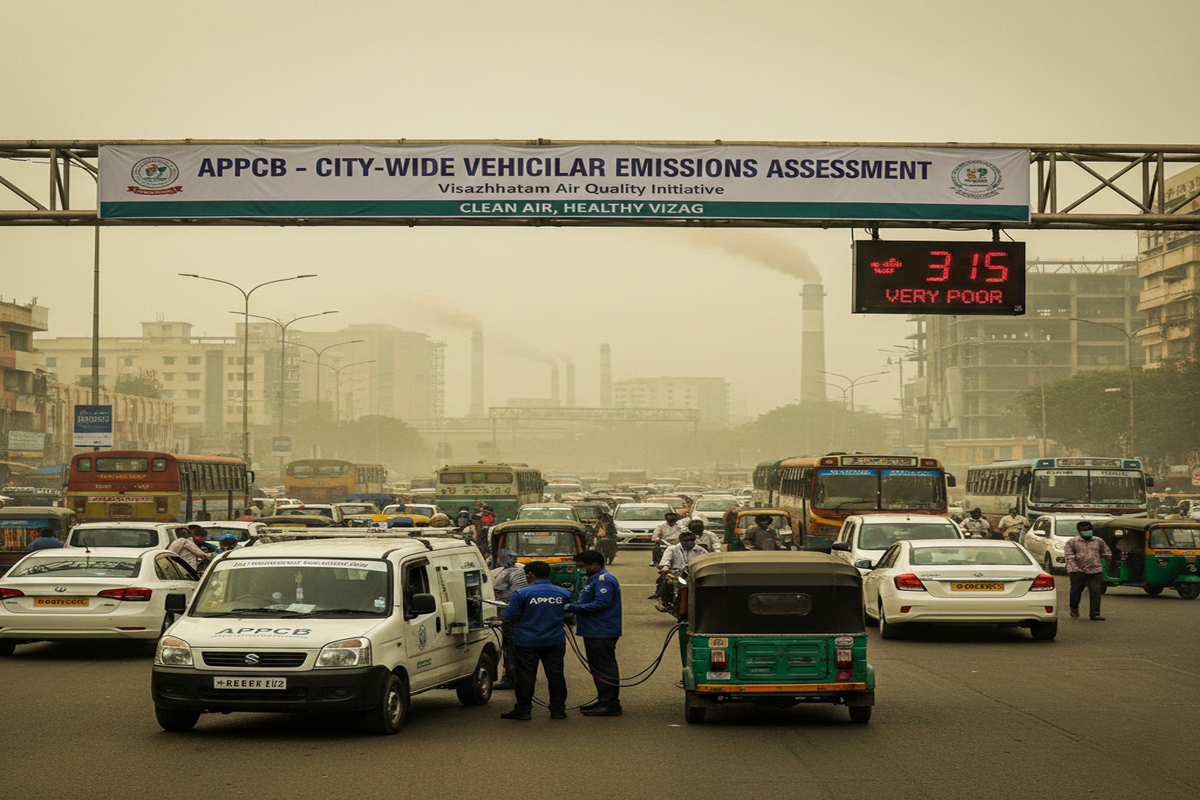
Andhra Pradesh Pollution Control Board (APPCB), in coordination with the State transport department, is planning a city-wide assessment of vehicular emissions in Visakhapatnam. The move comes as the city continues to record severe air pollution. The Air Quality Index has often crossed 300 and remains in the “very poor” category.
Officials link the worsening air quality to rising vehicular density. They also point to traffic congestion, ageing vehicles, and weak emission control practices.
The proposed assessment will quantify pollution loads from private and public transport vehicles. It will also identify key sources contributing to poor ambient air quality. Speaking to The Coastal Times, APPCB Chairman P. Krishnaiah said the Board will collect data on the total vehicle population in the city. This will include vehicles that have crossed their stipulated lifespan and those nearing the end of their service life.
The study will assess pollution levels generated by different vehicle categories. It will involve extensive on-road emission testing. Officials will also check compliance with Bharat Stage emission norms. The exercise will map pollution hotspots across the city. These include major traffic junctions, industrial corridors, and densely populated residential areas.
The Board will focus on older vehicles. It will also examine diesel-powered commercial fleets, auto-rickshaws, and poorly maintained public transport vehicles. These segments emit higher levels of particulate matter and nitrogen oxides.
Dr. Krishnaiah said Visakhapatnam’s role as a major industrial hub adds to the challenge. He noted that proposed investments by multinational companies, including AI data centre projects, could further strain air quality. He said the Board aims to reduce pollution through technology-driven solutions.
The APPCB is exploring the conversion of diesel-run vehicles to electric or CNG through retrofitment. It is drafting a policy to support this shift. The government may offer financial subsidies to auto-rickshaw and taxi operators. Officials are also considering stricter emission enforcement, stronger vehicle fitness checks, phased removal of highly polluting vehicles, and steps to strengthen public transport.