


CREDAI Welcomes Mandatory Green Building Energy Norms in AP
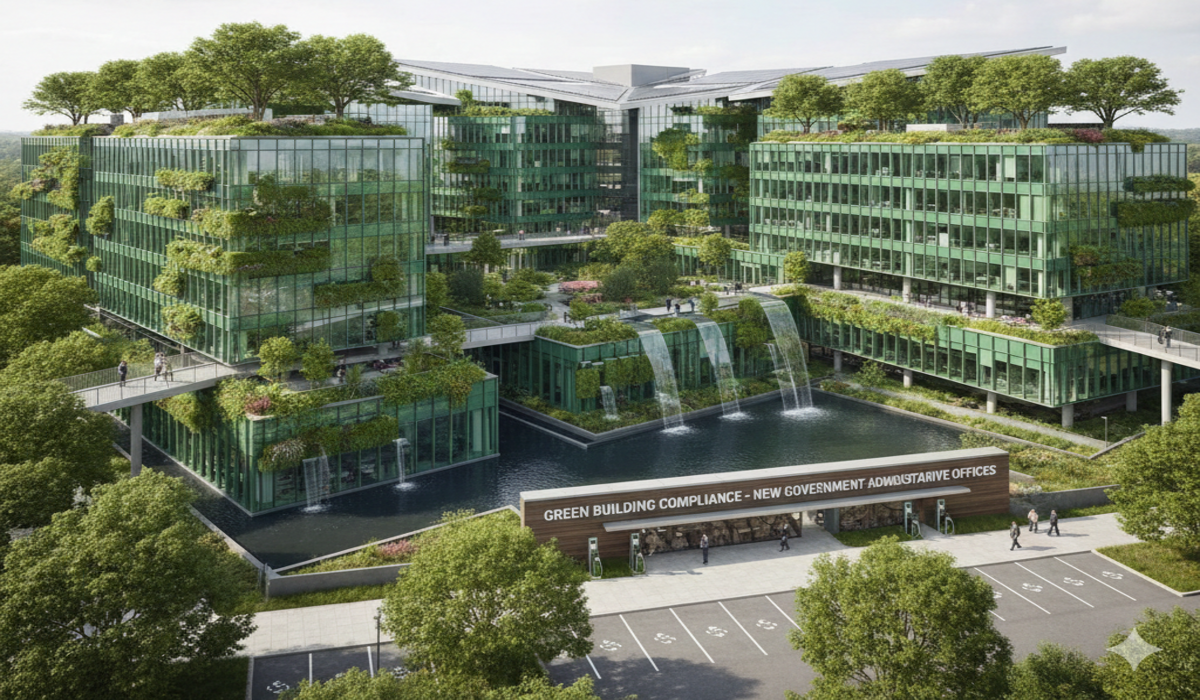
CREDAI Visakhapatnam welcomed the Andhra Pradesh government’s decision to make green building energy norms mandatory for large residential buildings and new government office buildings. The move aims to improve energy efficiency and reduce long-term electricity demand.
Under the revised rules, residential buildings with a built-up area above 4,000 sq. metres must follow the Andhra Pradesh Eco Niwas Samhita (APENS). APENS is the State version of the national energy conservation code. Government office buildings must comply with the Andhra Pradesh Energy Conservation and Sustainable Building Code (APECSBC).
Officials said the codes define minimum energy-efficiency standards for building design and operations. They cover key areas such as the building envelope, lighting, ventilation, and the use of renewable energy, including rooftop solar systems.
The government has connected compliance directly to building permissions and occupancy certificates (OC). During the approval process, applicants must submit an undertaking. After construction, they must provide a compliance certificate from the electrical authorities before the OC is issued.
A senior urban administration official said the policy became necessary due to rapid construction growth. “Energy demand rises due to cooling and lighting. If efficiency is built into the design stage, savings continue for decades,” the official said.
Industry representatives supported the decision but urged uniform implementation across urban local bodies. E. Ashok Kumar, President of CREDAI Visakhapatnam Chapter, said energy efficiency benefits residents, developers, and the government. However, he stressed the need to standardise compliance procedures. He warned that varying documentation and inspection practices across municipalities could delay occupancy certificates.
Green building consultants said major savings depend on strong building envelope standards. Better walls, windows, and roofs reduce heat gain and lower dependence on air-conditioning, a consultant explained.
Homebuyers also reported growing interest in energy-efficient features. A prospective buyer in Visakhapatnam said people now ask about ventilation, insulation, and electricity bills, not just amenities. Energy-efficient construction improves comfort and reduces long-term costs.
The codes encourage better building orientation, reflective roofs, insulation, and LED lighting. They also promote efficient electrical systems, rooftop solar, rainwater harvesting, reuse systems, eco-friendly materials, and other sustainable practices.
Observers said the government’s decision expands energy conservation beyond commercial buildings. It now covers large residential projects and public infrastructure, strengthening green construction norms in Andhra Pradesh.