


Andhra University Museum Brings Region’s Ancient Past to Life
The Archaeology Museum of the Department of History at Andhra University continues to attract attention for its extensive collection of inscriptions, ancient coins, and prehistoric artefacts that document different phases of regional history.
The museum houses archaeological material collected from excavations conducted across Andhra Pradesh over several decades. Many of the artefacts came from fieldwork carried out by faculty members and students of the department, a senior faculty member said.
Among the major attractions are stone inscriptions from the Kakatiya and Eastern Ganga dynasties, which ruled the region between the 11th and 13th centuries. Historians point out that Eastern Ganga inscriptions dated to 1059 CE, discovered in the Srikakulam district, are extremely rare. Experts note that such inscriptions are not found elsewhere in the country and offer valuable insights into the region’s political history.
Similarly, Kakatiya inscriptions dated to 1211 CE were recovered from excavations in the river basin areas of East and West Godavari districts. These inscriptions record details related to royal grants, taxation systems, and administrative practices. Archaeologists highlight the use of copper plates as a significant feature of this collection.
The museum also preserves an important collection of ancient coins. These include copper and silver coins from the Satavahana period discovered at Kotilingala in present-day Telangana. In addition, silver coins issued by the Asif Jahi and Qutb Shahi rulers, each weighing about 50 grams, are on display. Coins belonging to the rulers of Vizianagaram and Mysore are also part of the collection.
Another section traces the evolution of language and scripts from the Mauryan period of Emperor Ashoka to the Vijayanagara ruler Sri Krishnadevaraya. According to faculty members, visitors can clearly observe changes in scripts over centuries and the adoption of different writing systems by various rulers.
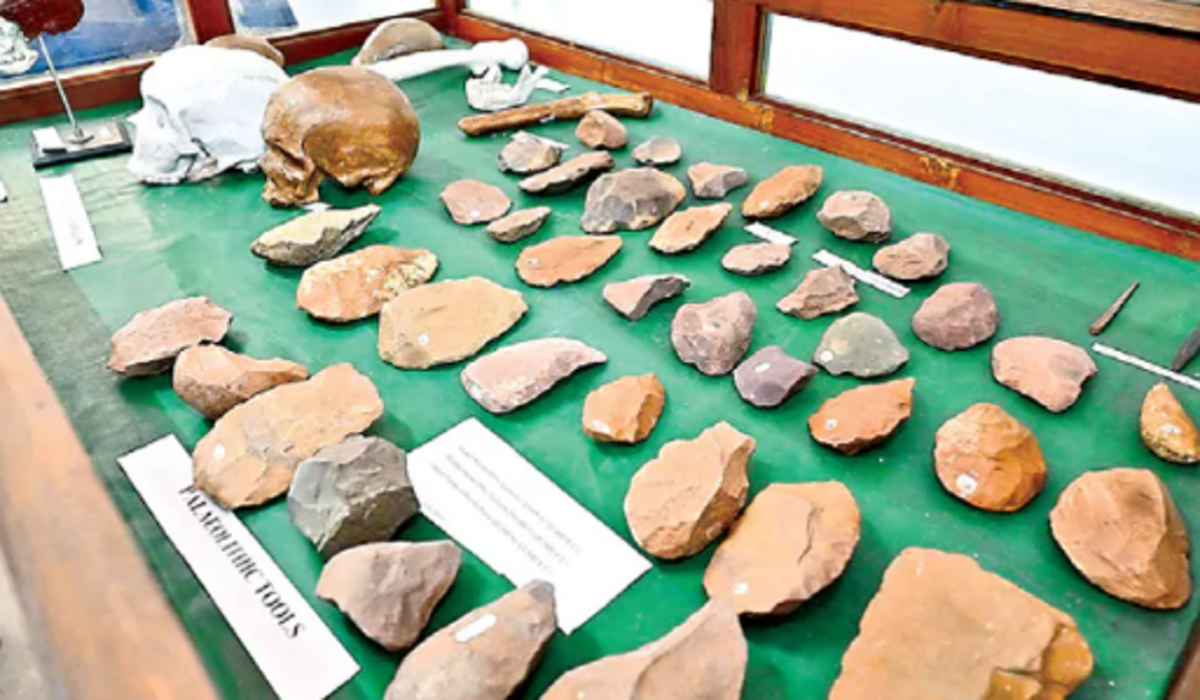
Apart from inscriptions and coins, the museum displays artefacts used by early humans. These include hunting tools, cooking vessels, fire-making implements, and agricultural equipment. The museum also preserves pottery and wheel-made objects dating back to the Harappan and Indus Valley Civilisation periods.
Meanwhile, historians and visitors have urged authorities to modernise the museum and improve public access. They believe that with better facilities, the museum could emerge as an important learning centre for students and history enthusiasts.