


City Urged to Act as House Sparrow Numbers Fall Sharply
As house sparrow numbers fall sharply in urban neighbourhoods, police and environmental groups on Sunday urged residents to take simple, immediate steps to protect the small bird that has long shared human spaces.
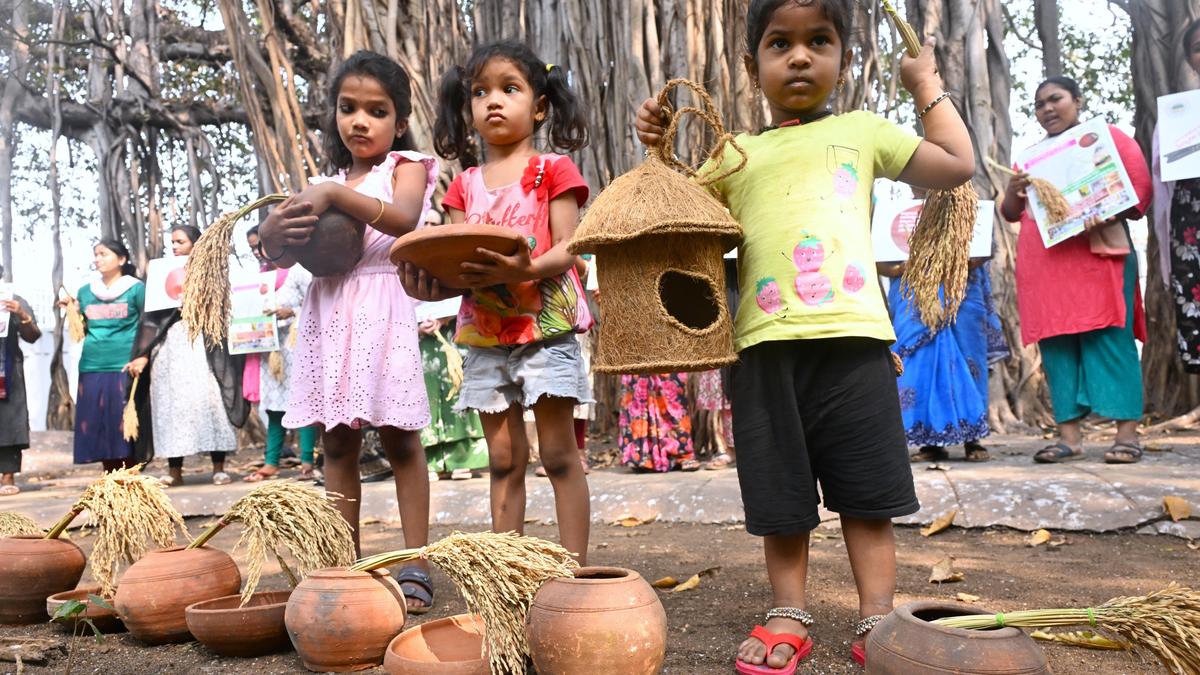
Assistant Commissioner of Police Raghavendra Rao led the call and described sparrows as vital “farmer friends” at the close of a 20-day awareness campaign. He spoke to citizens under a 150-year-old banyan tree near the city railway station. The organisers also screened a short film and distributed eco-friendly bird nests to volunteers and residents.
He said sparrows entered human homes thousands of years ago because they help protect rice crops from pests. He added that earlier generations even hung rice bunches from rooftops to feed the birds, but modern lifestyles have weakened this long-standing bond.
He urged families to act in small ways. For example, they can place water bowls on balconies, leave small gaps for nesting, and avoid sealing every cavity in buildings. He also asked residents to limit pesticide use in home gardens so that sparrows can find natural food.
Meanwhile, J.V. Ratnam, founder secretary of the Green Climate Team NGO, explained that environmental changes over recent decades have reduced sparrow populations. He said chemical pesticides have cut down the insects that sparrows rely on for food. In addition, the shift from tiled and grass-roofed houses to concrete structures has removed safe nesting spaces.
He further noted that urban noise, air pollution, and closed building designs make survival harder for the birds. Therefore, he said, communities must restore small green pockets and create bird-friendly spaces.
Shashiprabha, CEO of Sifa Trust, echoed the appeal and stressed that sparrow protection is a shared responsibility. She said people should provide food, water, and safe nesting places, and also involve schools and youth groups in awareness drives.
Organisers said students, nature lovers, and volunteers joined the campaign and pledged to install nests and maintain feeding points. They added that continued public support can help sparrow numbers recover and also rebuild the connection between people and urban wildlife.