


Braille Learning Transformed by GITAM Innovation
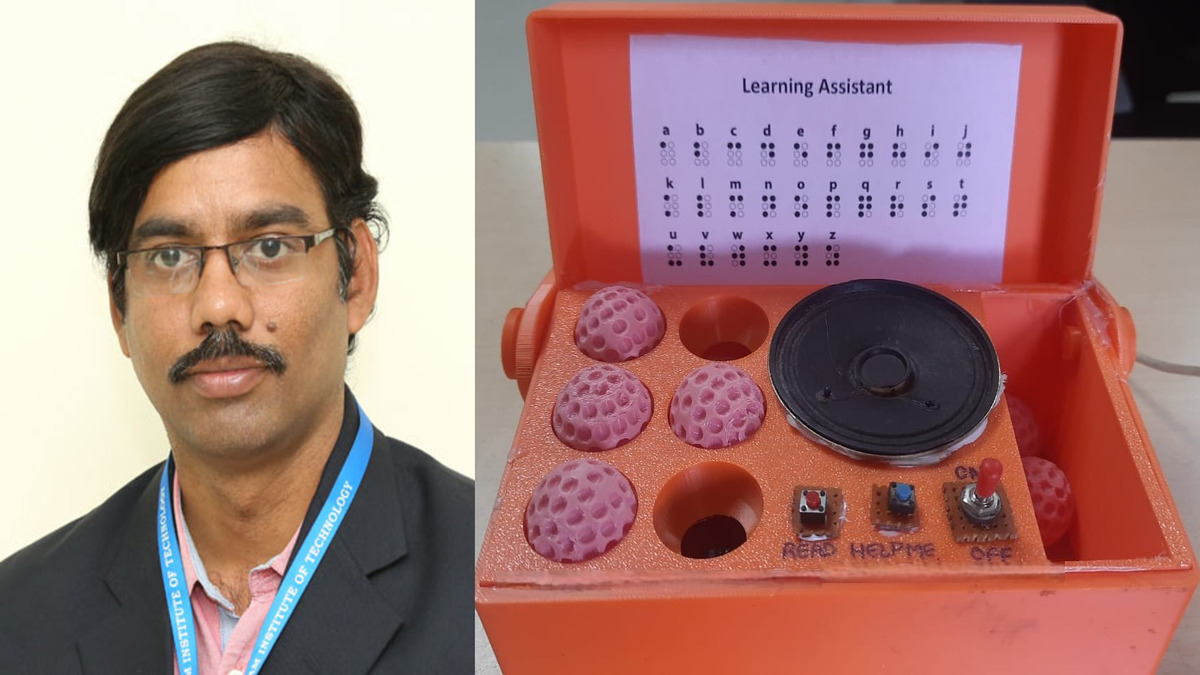
For visually impaired students, learning Braille has long been a time-consuming process, often demanding constant guidance from teachers. But an innovation from GITAM promises to change that. Mohammed Khwaja Muinuddin Chisti, Assistant Professor in the Department of EECE, has developed a device that allows students to learn Braille on their own, at their own pace.
The Learning Assistant Embedded Kit features a 3×2 hollow hemisphere Braille cell fitted with sensors that detect the patterns students create. “The system reads these patterns and immediately provides audio feedback, announcing the letters, numbers, or instructions,” Chisti explained. This instant response helps learners correct mistakes in real time, reinforcing their understanding and making practice more effective.
The device is designed for self-paced learning and revision, reducing dependence on teachers. “It not only boosts confidence among students but also allows educators to manage multiple learners without feeling overwhelmed,” he said. Beyond its practical benefits, the kit gives students a sense of independence, making Braille learning more engaging and rewarding.
Chisti has applied for a patent for the device, which he believes could mark a significant step forward in inclusive education. “Our aim is to make Braille learning accessible and efficient, so visually impaired students can acquire literacy skills independently,” he said. With wider adoption, this innovation could reshape classrooms and learning environments for visually challenged students across the country.