


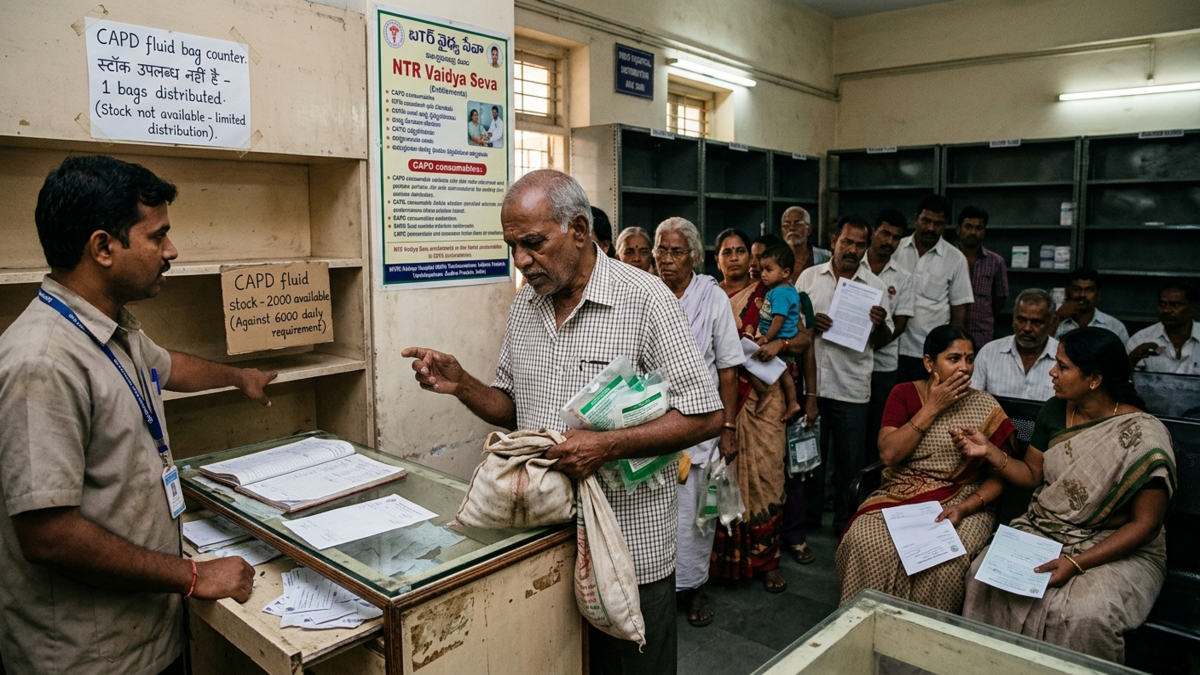
CAPD fluid shortage at KGH affects dialysis patients
A shortage of Continuous Ambulatory Peritoneal Dialysis (CAPD) fluid bags at King George Hospital (KGH) has disrupted care for patients dependent on home-based dialysis across north coastal Andhra Pradesh. The hospital serves districts from Srikakulam to Alluri Sitarama Raju.
Patients and attendants say the hospital is not meeting demand. Many make repeated visits to obtain essential supplies, often without success.
Officials of the Andhra Pradesh Medical Services and Infrastructure Development Corporation (APMSIDC) pharmacy here acknowledged the shortfall. They said the hospital needs about 6,000 CAPD fluid bags a day but currently has only 2,000. They have informed higher authorities and initiated steps to address the issue.
Patients undergoing CAPD therapy say each person needs nearly 90 fluid bags a month for uninterrupted treatment. The NTR Vaidya Seva scheme covers these consumables. However, the shortage forces patients to visit the hospital frequently.
“Buying the fluid bags from private sources costs ₹30,000 to ₹35,000 a month. This puts a heavy burden on families,” they said.
- Narayana Rao, who regularly visits KGH to collect CAPD fluid bags for his wife, said the shortage has created serious difficulties for patients relying on home dialysis. He also raised concerns about the quality of supplies and said the hospital earlier provided better-quality bags.
He alleged that a firm manufacturing some of the currently distributed CAPD bags has faced restrictions in other States. He said he submitted a formal complaint to the authorities on both supply and quality issues.
Citing documents, patients said the Tamil Nadu Medical Services Corporation (TNMSC) withdrew a batch of CAPD solution in March 2024 after reports of adverse effects. In August 2023, TNMSC flagged repeated complaints, including particulate matter. It also noted that the Director General of Armed Forces Medical Services had conditionally debarred the firm for “not of standard quality”. Authorities later cancelled procurement orders and retrieved stocks.
Patients said the shortage and quality concerns are affecting continuity of care. They urged the authorities to ensure a steady and reliable supply of essential dialysis consumables at the earliest.