


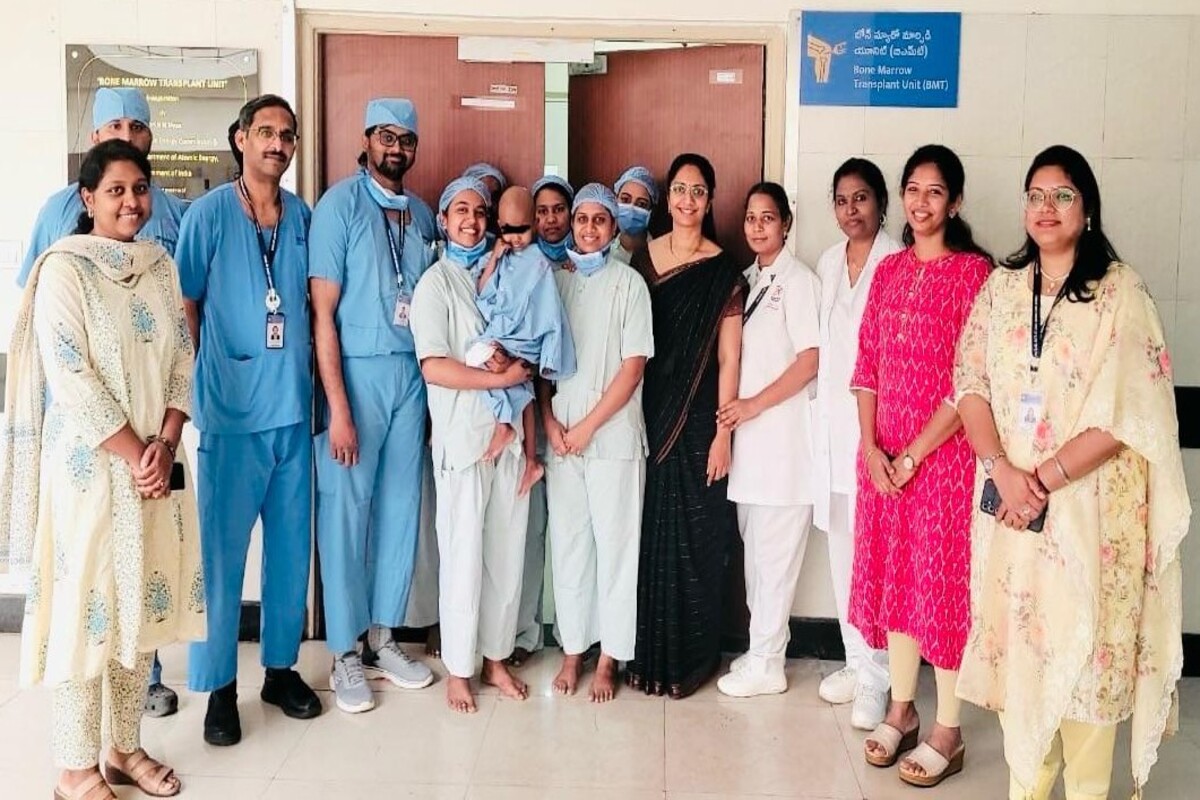
HBCH&RC Achieves India’s First Tandem Stem Cell Transplant for Rare Pediatric Brain Tumor
In a major step for pediatric oncology, the Homi Bhabha Cancer Hospital and Research Centre (HBCH&RC) in Visakhapatnam successfully performed a tandem autologous stem cell transplant on a three-year-old girl with a rare and aggressive brain tumor, marking the first documented case of its kind in India.
The child was diagnosed with Embryonal Tumor with Multi-layered Rosettes (ETMR), one of the most lethal brain cancers affecting very young children. Although survival outcomes have historically been poor, advances in high-dose chemotherapy and transplant strategies are beginning to improve prospects for select high-risk patients.
A tandem autologous transplant is a two-stage treatment that involves administering high-dose chemotherapy followed by reinfusion of the patient’s own stem cells. After a short recovery period, the cycle is repeated. This approach is typically reserved for selected high-risk cases.
HBCH&RC, a unit of the Tata Memorial Centre under the Department of Atomic Energy, reported that the child from Andhra Pradesh had earlier undergone surgery and chemotherapy at the Tata Memorial Hospital in Mumbai. She was later referred to Visakhapatnam for the transplant phase. The procedure was carried out between December 2025 and January 2026.
Following several weeks of close monitoring and supportive care, the child was discharged in stable condition, with no significant complications reported.
Speaking to The Coastal Times, Dr. Umesh Mahantshetty, Director of HBCH&RC, said the case demonstrates the centre’s growing capability to deliver highly complex oncology care. He explained that a tandem autologous stem cell transplant demands sophisticated infrastructure, close multidisciplinary coordination, and intensive supportive care, all of which are now well established at the Visakhapatnam facility.
He added that in 2025, the hospital treated more than 9,000 newly registered cancer patients, including those requiring bone marrow transplants and other advanced procedures. He noted that this achievement reflects the institution’s continued progress in offering therapies on par with leading national centres.
Dr. Mahantshetty also pointed to the wider regional benefit, stating that patients from Andhra Pradesh and neighbouring states can increasingly access specialized cancer treatment locally. This, he observed, helps ease the emotional, logistical, and financial strain of traveling to distant metropolitan cities for advanced care.