


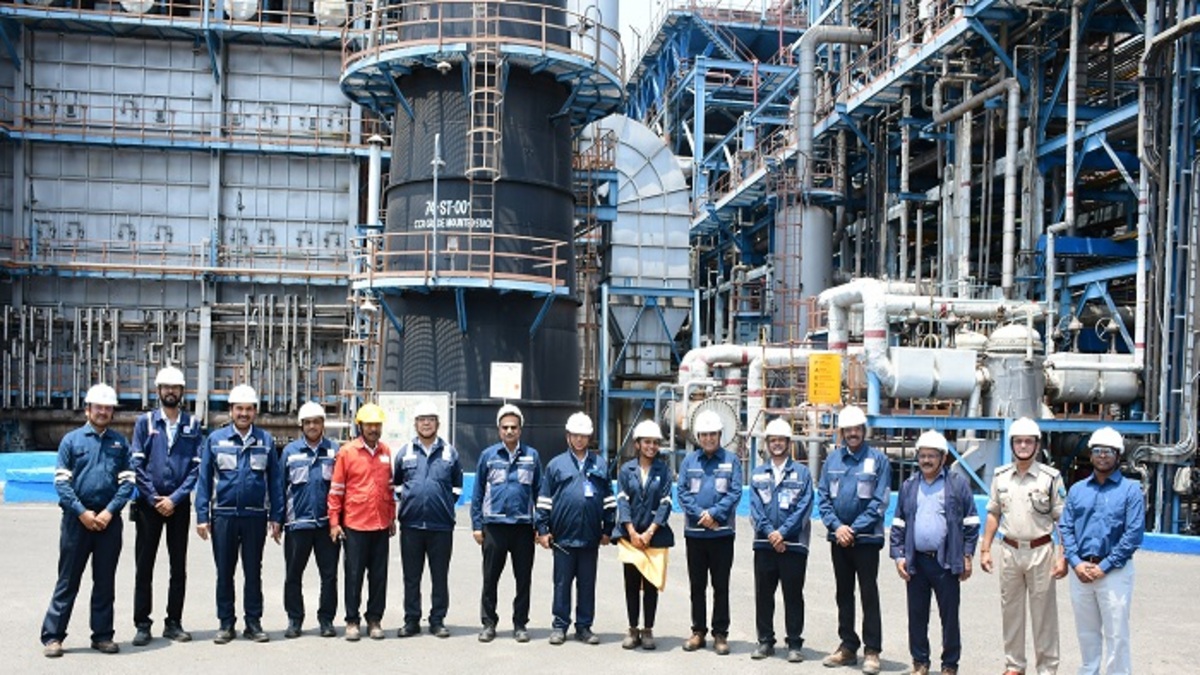
HPCL commissions residue upgradation facility at Vizag refinery
Hindustan Petroleum Corporation Ltd. (HPCL) has commissioned the Residue Upgradation Facility (RUF) at its Visakhapatnam refinery, marking an important step in strengthening India’s deep-conversion refining capacity and energy security.
The Maharatna PSU said the project supports the Centre’s Aatmanirbhar Bharat initiative. Several critical equipment used in the facility were manufactured in India, improving domestic capabilities in the refining sector.
The RUF is the first facility of its kind in the country. It also stands out as a major engineering achievement. The unit houses three LC-Max reactors, each weighing about 2,200 tonnes, placing them among the heaviest such reactors globally.
The 3.55 million tonnes per annum facility uses advanced LC-Max residue hydrocracking technology. It converts nearly 93 per cent of bottom oils into high-value products. As a result, the Visakh refinery is expected to increase its distillate yield by up to 10 per cent compared with pre-modernisation levels.
HPCL said the commissioning will lead to a clear improvement in gross refining margins. This will come from a better product mix, higher flexibility to process heavier and opportunity crudes, and improved value realisation per barrel.
In addition, the rise in middle-distillate output will help reduce the gap between HPCL’s diesel marketing and refining volumes. This will lower dependence on external sourcing and strengthen supply chain reliability, the company said.
At the same time, improved heat integration and process efficiency have reduced the refinery’s Energy Intensity Index. This has brought down operating costs while supporting sustainability goals.
With the RUF now operational, the Nelson Complexity Index of the Visakh refinery has increased to 11.6. This places it among India’s most advanced deep-conversion refineries.
Along with the physical commissioning, HPCL has rolled out the RUF LC-Max Digital Suite. The company described it as an industry-first for Indian refineries.
HPCL acknowledged the support of the Ministry of Petroleum and Natural Gas, other Central ministries, the Andhra Pradesh government, and statutory bodies. It also thanked project partners, including CLG, Larsen & Toubro, Engineers India Ltd., vendors, contractors, and its internal teams for their role in completing the project.