


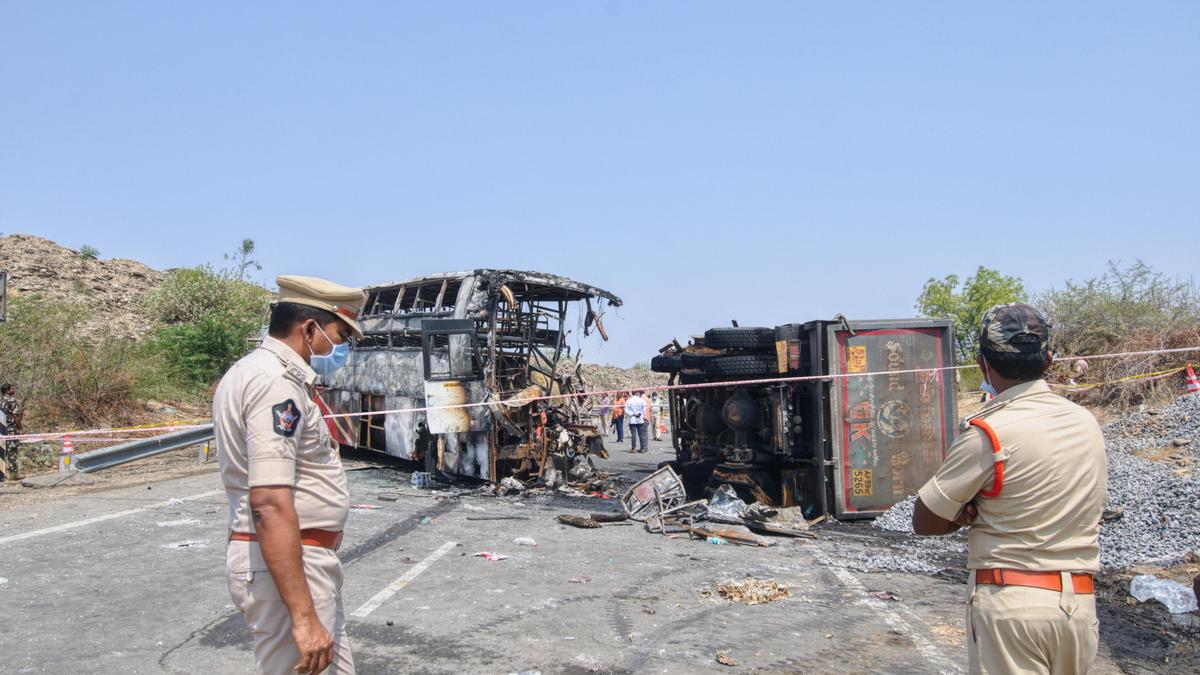
Recurring bus infernos raise safety concerns in Andhra Pradesh
Even as Andhra Pradesh struggles to recover from a string of fatal bus fires, Thursday’s blaze at Rayavaram has once again exposed systemic gaps in enforcement, vehicle safety, and regulatory oversight.
The latest incident comes months after the Kurnool bus fire incident, which left 20 people dead, with similar high-casualty accidents continuing to occur in quick succession.
Officials say one of the biggest hurdles lies in regulating buses registered outside the state. The private non-sleeper bus involved in Thursday’s accident was registered in Namsai, Arunachal Pradesh, in 2017 — a practice increasingly adopted by operators to bypass stricter enforcement in southern states.
Andhra Pradesh Transport Commissioner Manish Kumar Sinha acknowledged the challenge, saying the legal framework needs to be strengthened to give Motor Vehicle Inspectors greater authority over All India Tourist Permit buses operating across states. He pointed out that nearly 200 private buses seized during statewide checks after the Kurnool incident were later challenged in courts.
In the aftermath of the Kurnool tragedy, the government had commissioned the Administrative Staff College of India to carry out a technical study into safety failures, maintenance lapses, and emergency response systems. While the panel has completed its work, the report is yet to be submitted.
Sources indicate the findings call for sweeping changes across road engineering, vehicle design, and operational practices. Recommendations include improved road markings and better visibility through retro-reflective crash barriers, along with the use of fire-resistant materials in bus interiors and heat-resistant separation between engine compartments and passenger areas.
The report also stresses the need for automatic fire suppression systems, mandatory certification for bus body fabrication, and fire department clearance before registration or renewal of fitness certificates.
Safety mechanisms such as smoke and heat detectors, audible alarms, multiple emergency exits, and enhanced lighting systems have also been proposed, particularly for sleeper buses where passengers may be less alert during emergencies.
Further, it calls for training drivers and attendants in evacuation and fire response, along with pre-journey safety briefings for passengers. To improve oversight, the panel has recommended mandatory Vehicle Location Tracking systems to monitor speed, routes, and driver working hours, aimed at reducing fatigue-related risks.
With another tragedy unfolding, officials say the focus must now shift from recommendations to implementation.