


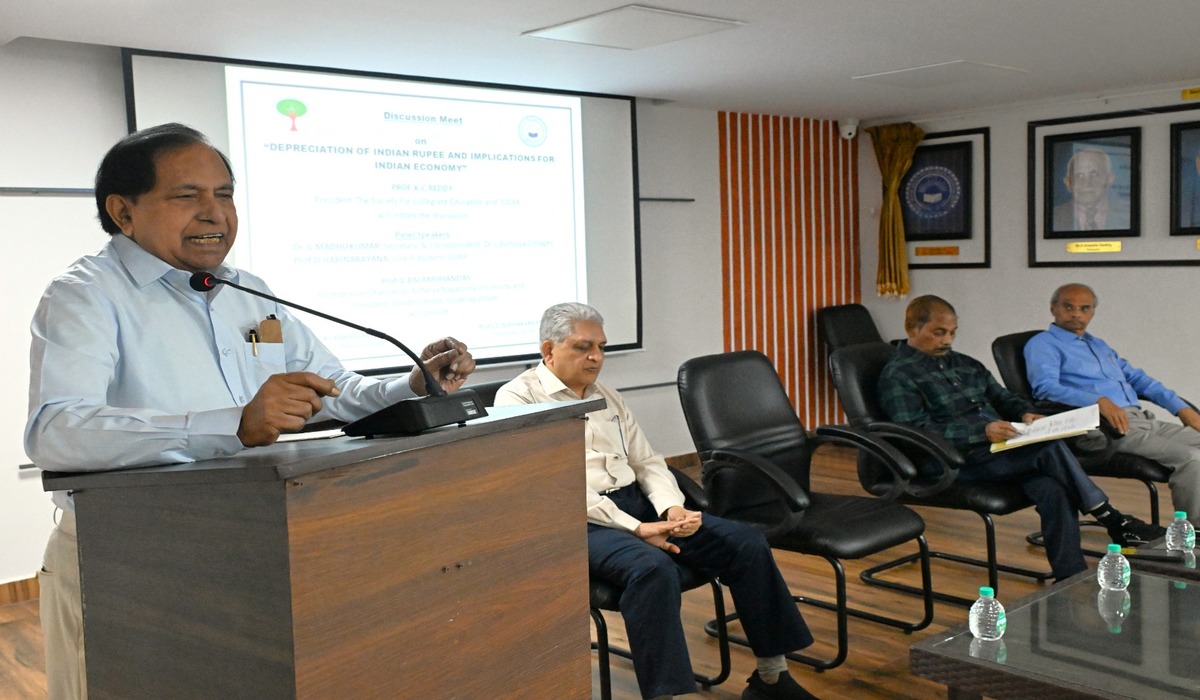
Rupee Faces Continued Pressure Amid Trade Gaps and Global Shifts, Experts Warn
The recent weakness of the Indian rupee stems from a mix of domestic pressures and global developments, including softer exports, rising imports, a widening current account deficit, and shifts in US tariff policy, Prof. K. C. Reddy said on Saturday.
Speaking at a session on “Depreciation of the Indian Rupee and Implications for the Indian Economy,” organised by the Society for Integrated Development and Research in association with Dr. Lankapalli Bullayya College, Prof. Reddy said pressure on the currency could continue without timely corrective steps.
He called for a predictable trade policy, stronger foreign direct investment inflows, and renewed focus on manufacturing, particularly among micro, small, and medium enterprises. Coordinated domestic and external measures are needed to restore growth momentum, he said.
Prof. Harinarayana, vice-president of the Society, presented exchange rate data and attributed the rupee’s weakness to the current account deficit, subdued exports, low productivity, and structural factors such as export and income elasticity. He advocated expanding rupee-based trade arrangements, promoting exports, and adopting a calibrated approach to imports. While depreciation may have short-term costs, it could support longer-term stability, he said.
Dr. G. Madhukumar, secretary and correspondent of the college, cited productivity gaps, foreign exchange market dynamics, and the role of domestic investors as additional factors. Drawing on his experience in currency trading, he stressed the need to enhance competitiveness.
Academics, economists, business leaders, faculty members, students, and members of the public attended the event.