


Study Highlights Trends in Homicide Cases in Visakhapatnam
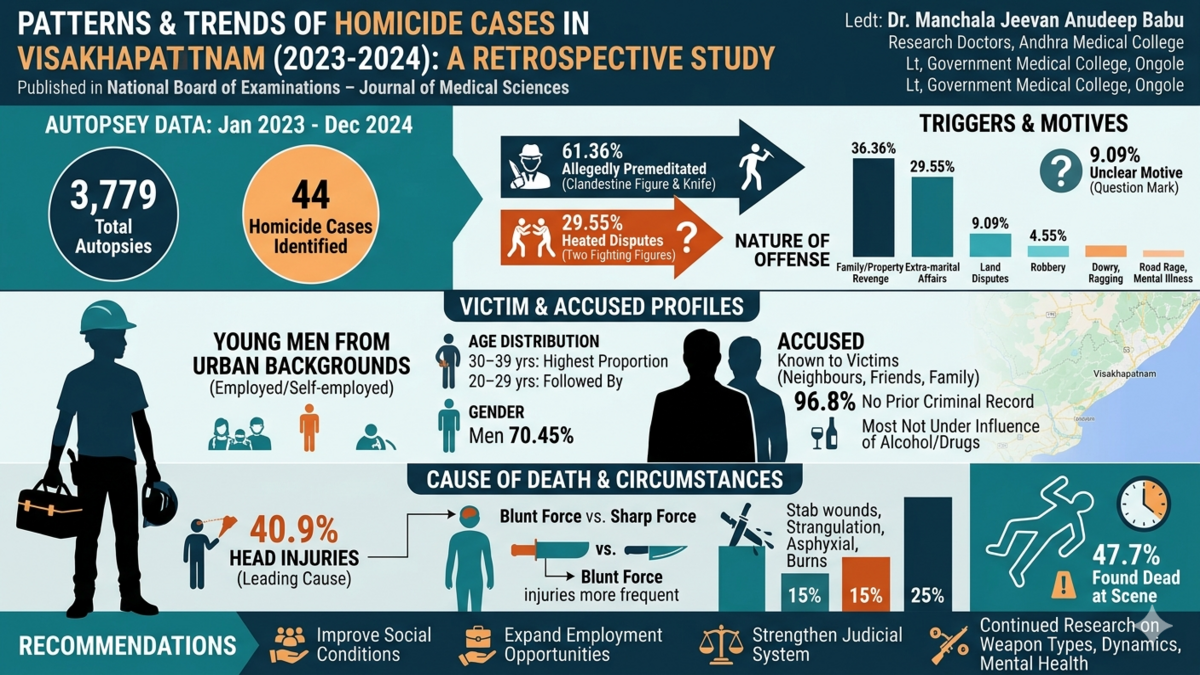
A study conducted by doctors from Andhra Medical College has examined homicide cases subjected to autopsy between January 2023 and December 2024, revealing patterns in motive, method, and victim profile. Out of 3,779 autopsies performed during this period, 44 were identified as homicides.
The findings indicate that a majority of killings (61.36%) were allegedly premeditated, while 29.55% occurred during heated disputes. The motive remained unclear in 9.09% of cases. Among the cases with known triggers, family and property-related revenge accounted for 36.36%, suspected or existing extra-marital affairs 29.55%, land disputes 9.09%, and robbery 4.55%. Other isolated cases involved dowry, ragging, road rage, threats, and mental illness.
Most victims were young men from urban backgrounds, employed or self-employed. Blunt force injuries were more frequent than sharp force injuries, with head trauma emerging as the leading cause of death. Nearly half (47.7%) of the victims were found dead at the scene.
The study also found that in most cases, the accused were known to the victims, often neighbours, friends, or family members, and 96.8% had no prior criminal record. Data on substance use indicated that most offenders were not under the influence of alcohol or drugs at the time of the incident.
Researchers analysed variables including age, sex, marital status, occupation, criminal history, victim–accused relationship, substance influence, weapon type, and nature of assault. Men accounted for 70.45% of victims, with the highest proportion in the 30–39 age group, followed by those aged 20–29. Head injuries were responsible for 40.9% of deaths, while burns, stab wounds, strangulation, and asphyxial deaths accounted for smaller proportions.
The study, led by Dr. Manchala Jeevan Anudeep Babu, Dr. Srinivasa Reddy Nandiki, Dr. Sravani Yandava, Dr. S.M. Krishna Sagar, Dr. Annie P of Andhra Medical College, and Dr. Kattamreddy Ananth Rupesh of Government Medical College, Ongole, underlined the importance of improving social conditions, expanding employment opportunities, strengthening the judicial system, and conducting continued research into factors such as weapon types, victim–offender dynamics, and mental health.
The research, titled “Patterns and Trends of Homicide Cases Autopsied at a Tertiary Care Hospital in Visakhapatnam: A Retrospective Study”, was published in the National Board of Examinations – Journal of Medical Sciences.