


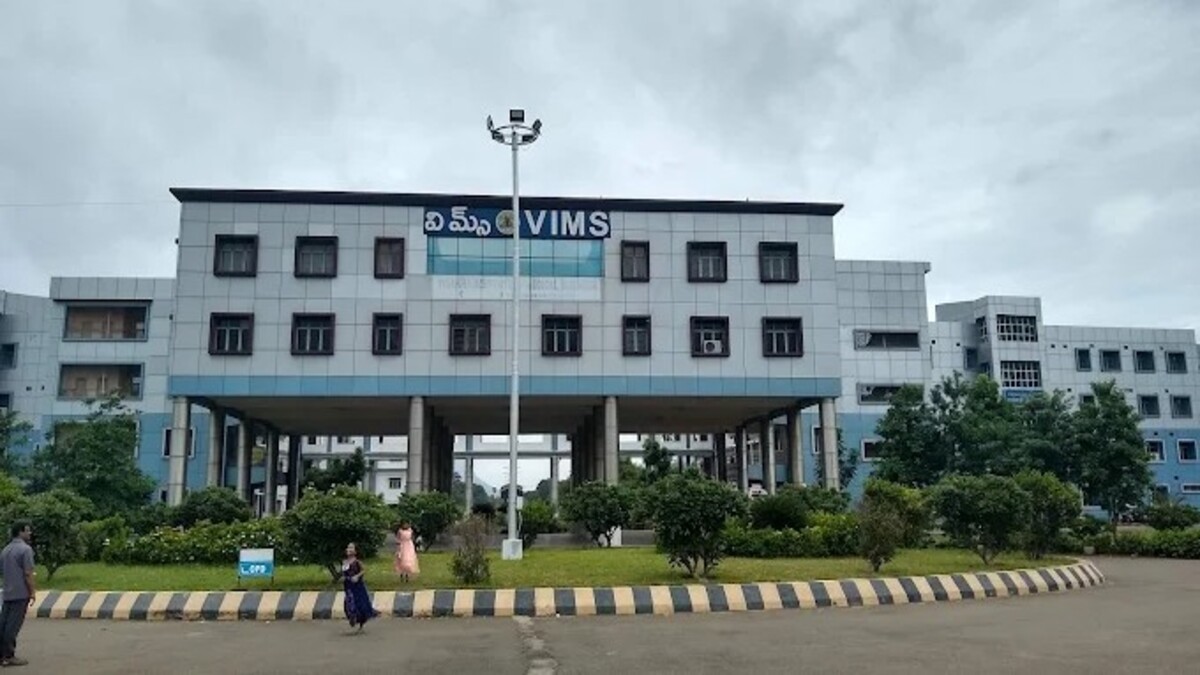
VIMS Offers ₹8-Lakh GBS Treatment Free
The Visakha Institute of Medical Sciences (VIMS) has administered life-saving treatment worth nearly ₹8 lakhs free of charge to a 32-year-old woman suffering from Guillain-Barré Syndrome (GBS) — a rare autoimmune disorder that attacks the peripheral nervous system — under the State government’s NTR Medical Services scheme.
The patient, admitted in critical condition, received 50 Intravenous Immunoglobulin (IVIG) injections over the course of her treatment. Doctors initially administered 25 injections, followed by an additional 25 when her condition showed no signs of improvement. She has since made a full recovery and is currently undergoing physiotherapy.
This development comes amid a significant increase in neurological cases at the public hospital. Senior physicians at VIMS note that one in every three patients admitted to the neurology department presents with a brain stroke — a medical emergency that demands immediate intervention.
Stroke patients must receive injections worth approximately ₹50,000 within a critical three-hour window to prevent long-term disability or death. The hospital treated 503 such patients free of charge last year, and the figure has already reached 200 in the current year.
In the case of GBS, the hospital treated 18 patients last year, while five have received care so far this year. All patients who recover from the condition are offered follow-up physiotherapy as part of their rehabilitation.
Speaking to The Coastal Times, VIMS Director Dr. K. Rambaboo said the hospital was fully equipped to handle neurological emergencies at all times. “Medical staff is available round the clock, and essential injections are kept in constant supply. Patients suffering from brain stroke, GBS, epilepsy, paralysis, muscular dystrophy, and related conditions can access advanced treatment here without bearing any financial burden,” he said.
Dr. Rambaboo emphasised that the hospital’s neurology department remained committed to ensuring that the cost of treatment was never a barrier to quality care, particularly for patients from economically weaker sections of society.