


130 Years of Visakhapatnam Railway Station
Visakhapatnam Railway Station celebrated its 130th anniversary with a grand Station Mahotsav, tracing its journey from the erstwhile Waltair era to its present status as a major transit hub on the eastern coast.
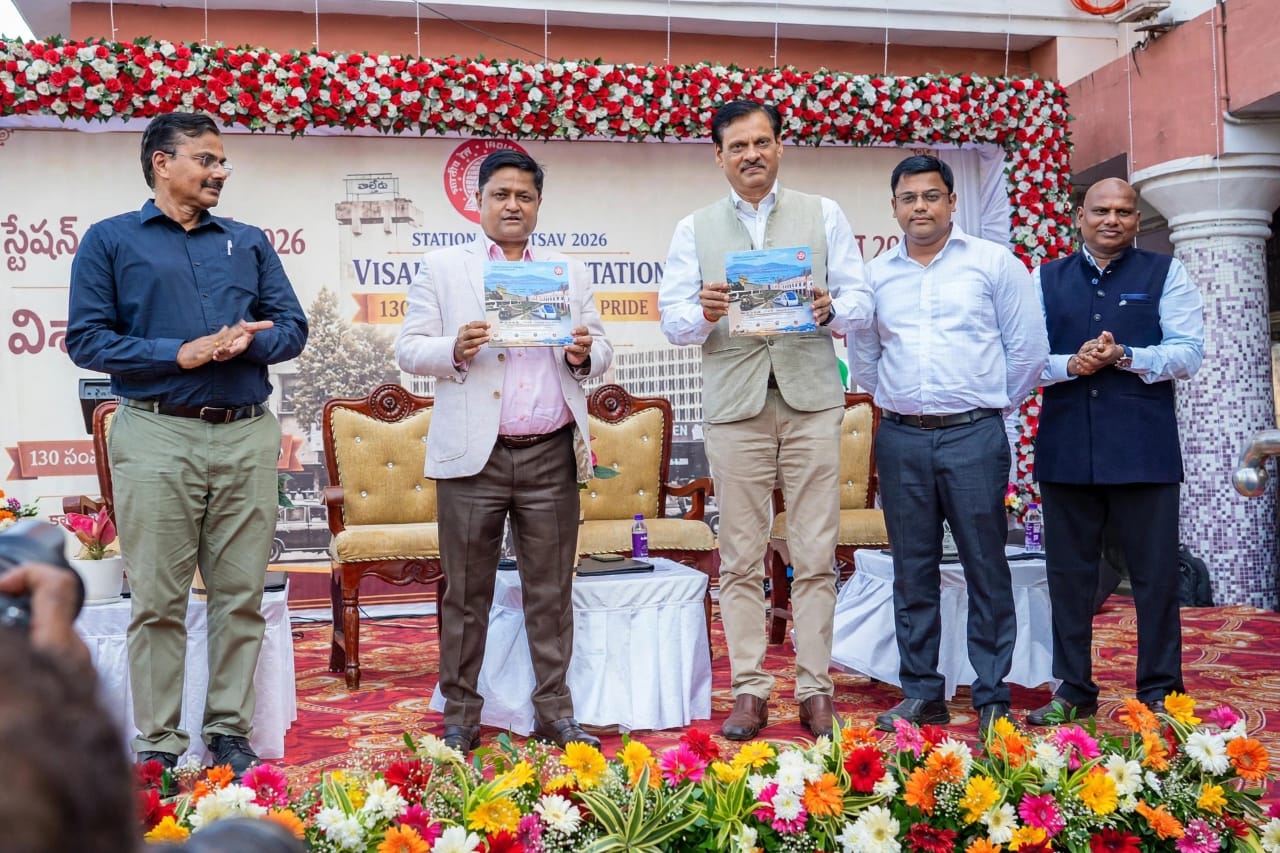
The celebrations were held as part of a nationwide initiative of the Ministry of Railways to commemorate historic railway stations. The programme featured cultural performances, a heritage exhibition and the release of a commemorative coffee table book, Waltair Visakhapatnam.
The celebrations began with a flag march, followed by a historical photo exhibition and a display of heritage artefacts. Rare archival photographs, vintage memorabilia and historic relics depicting the evolution of the erstwhile Waltair Division were on show.
South Coast Railway (SCoR) General Manager Sandeep Mathur released the coffee table book, which chronicles more than a century of railway development, key milestones and iconic heritage structures associated with Visakhapatnam and the Waltair era.
The festivities also featured the ceremonial release of a helium balloon, the distribution of commemorative mementoes and cultural performances showcasing the region’s art and traditions.
“From its modest origins in 1896 with just two platforms and a daily footfall of barely 200 passengers, Visakhapatnam Railway Station has grown into a bustling transit hub serving over 65,000 passengers daily across eight platforms,” Mathur said.
He said the ongoing world-class redevelopment of the station, which will expand it to 14 platforms, reflected the national ethos of “Virasat Bhi, Vikas Bhi” (Heritage as well as Development). The project seeks to integrate the station’s rich historical legacy with future-ready infrastructure, seamless intermodal connectivity and advanced technology.
Divisional Railway Manager (DRM) Lalit Bohra said the Railways was committed to modernising the station while preserving its heritage. He thanked the people of Visakhapatnam for their continued support and cooperation in the redevelopment project.