


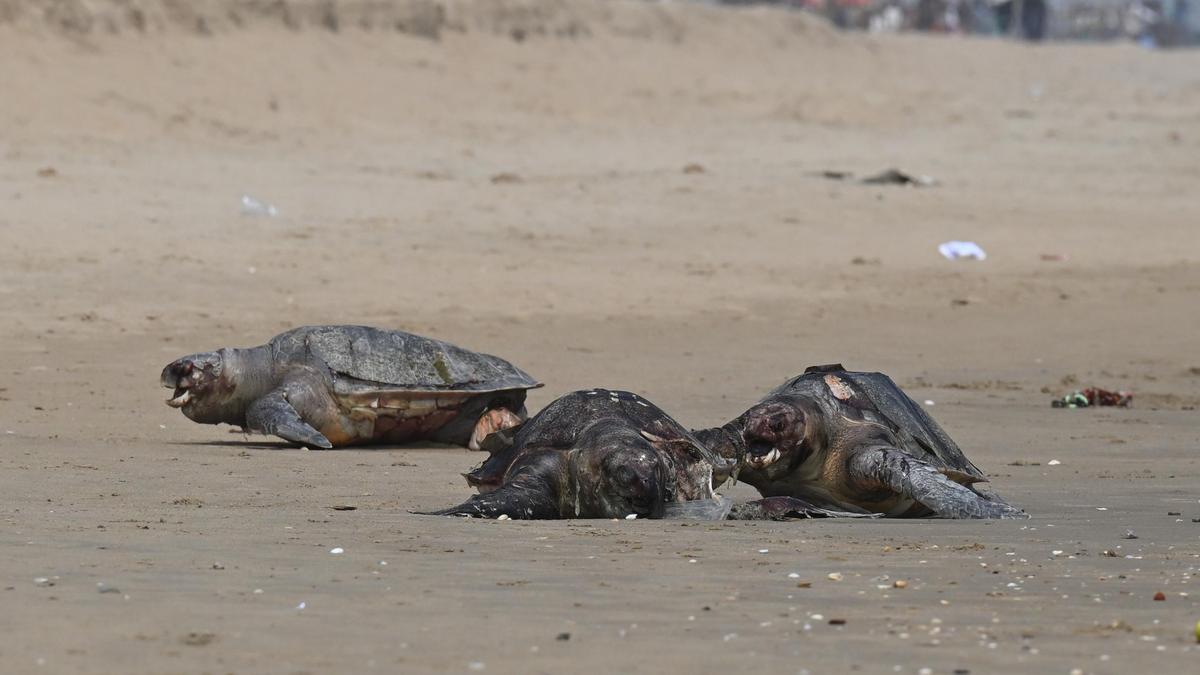
150 Olive Ridley Turtles Found Dead on Srikakulam Coast
The discovery of more than 150 dead olive ridley sea turtles along the Dokulapadu coast in Vajrapukotturu mandal of Srikakulam district over the past few days has sparked concern among environmentalists, marine experts, and residents.
Carcasses were found scattered along the shoreline, shocking villagers and nature lovers, particularly as the incident coincides with the peak nesting season of the endangered species. Olive ridley turtles migrate close to the coast between December and January to lay eggs, making this a crucial period in their life cycle.
Local fishermen and residents attribute the deaths to the increasing use of squid fishing nets and rising plastic pollution in the sea. “These turtles often get caught in fine-mesh nets meant for squid. Once trapped, they cannot come up for air and eventually die,” said a fisherman from Vajrapukotturu.
Marine biologists echoed these concerns, stating that turtle mortality during nesting season is a serious warning sign. “When adult females approach the shore for nesting, they face threats from fishing gear, especially ghost nets, and floating plastic debris,” said Dr. K. Ramesh, a marine wildlife researcher. “A large number of deaths in a short span suggests stress in the nearshore ecosystem.”
Environmentalists also highlighted plastic waste as a major hazard. Turtles often mistake plastic for jellyfish, their natural food, leading to internal blockages and death. Discarded fishing gear continues to trap marine life long after it is abandoned, they added.
The Forest Department, which monitors turtle activity during nesting season, has begun assessing the situation. Officials said field reports and samples are being collected, and fishermen will be advised to avoid harmful net types in turtle movement zones.
Meanwhile, local organisation Sneha Kalamandali buried the carcasses near the shore and urged the government to strengthen regulation of fishing practices, promote turtle-friendly nets, and intensify coastal clean-up efforts to protect nesting sites.