


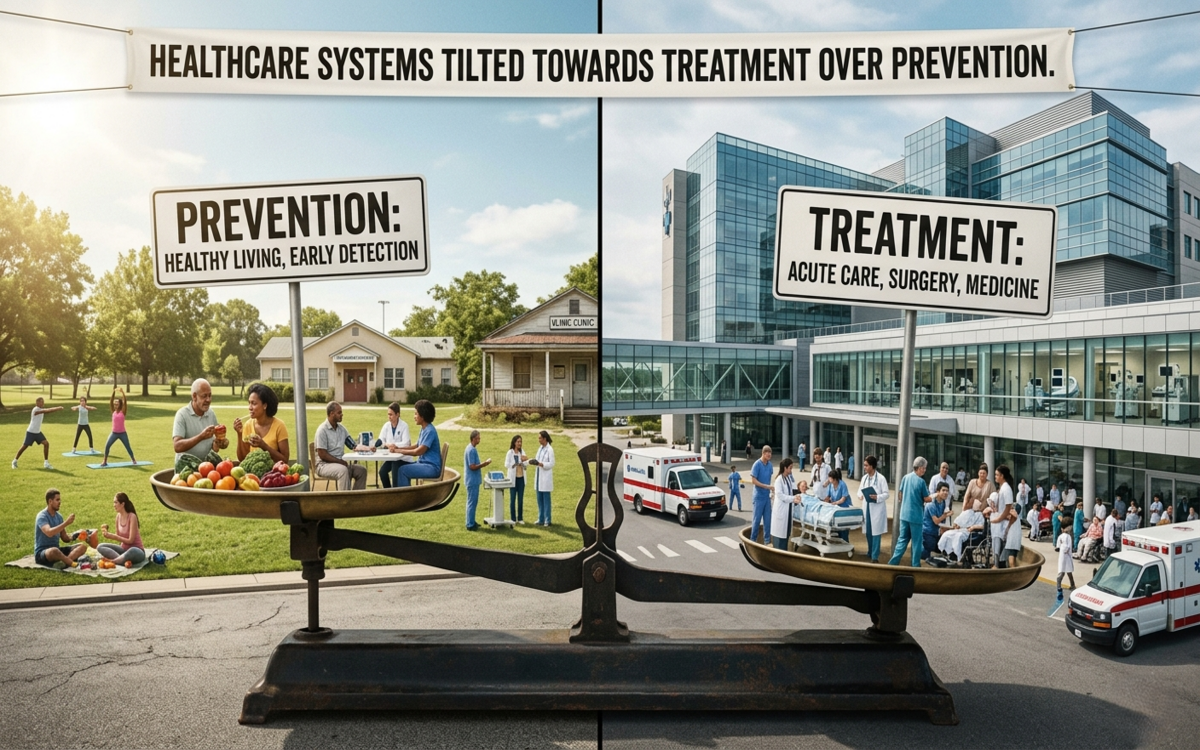
Healthcare systems still tilted towards treatment over prevention, say experts
Despite significant advances in medical science, public health specialists have raised concerns that modern healthcare systems continue to be structured in a way that prioritises treatment over prevention, creating what they describe as a persistent cycle in which diseases are managed effectively only after they occur.
Experts say the issue lies in how incentives are designed within the system. A widely cited principle in behavioural economics holds that incentives determine outcomes. In healthcare, they argue, these incentives remain disproportionately focused on treatment once illness develops, rather than on sustaining long-term population health.
Much of the current healthcare framework, including insurance reimbursements and subsidised treatment schemes, is activated only after diagnosis. Preventive care, however, often depends on individual awareness or scattered public health initiatives rather than structured and sustained institutional support.
A public health researcher said the imbalance is increasingly evident in health outcomes. “We have strong systems for treating disease after it appears, but prevention continues to receive uneven attention and investment. That leads to outcomes that are both predictable and avoidable,” the researcher said.
Experts caution that this treatment-centric approach is contributing to rising healthcare costs and mounting pressure on hospitals and public health infrastructure, as preventable conditions accumulate and are addressed at later stages.
A healthcare policy analyst noted: “When prevention is not properly incentivised, systems naturally default to reaction. This is costlier, more resource-intensive, and ultimately less effective in improving population health.”
The gap is particularly visible in seasonal and lifestyle-related illnesses. Vector-borne diseases that surge during monsoons are widely recognised as preventable through sanitation measures, awareness campaigns, and early intervention, yet healthcare responses often remain focused on treatment after outbreaks occur.
Tobacco-related diseases show a similar pattern, with strong clinical treatment pathways for advanced illness but relatively weaker emphasis on sustained preventive action to reduce long-term usage.
Vaccination coverage also reflects this imbalance. Health professionals point to cervical cancer vaccination as an example of a proven preventive measure that has yet to achieve consistent uptake in several regions.
A clinician working in preventive medicine said the issue reflects deeper structural priorities. “Medical science has made remarkable progress in treating complex diseases, but prevention still relies too heavily on awareness and individual responsibility rather than system-level reinforcement,” the clinician said.
Experts emphasise that addressing the challenge will require more than incremental policy changes and instead call for a broader shift in how health is valued and prioritised.
A public health advocate said, “The true measure of a healthcare system is not how well it treats illness, but how effectively it prevents it. Until incentives are aligned with that reality, reactive care will continue to dominate.”
They added that stronger investment in preventive screening, early detection, and community-based health education could significantly reduce long-term disease burden and ease pressure on healthcare systems.