


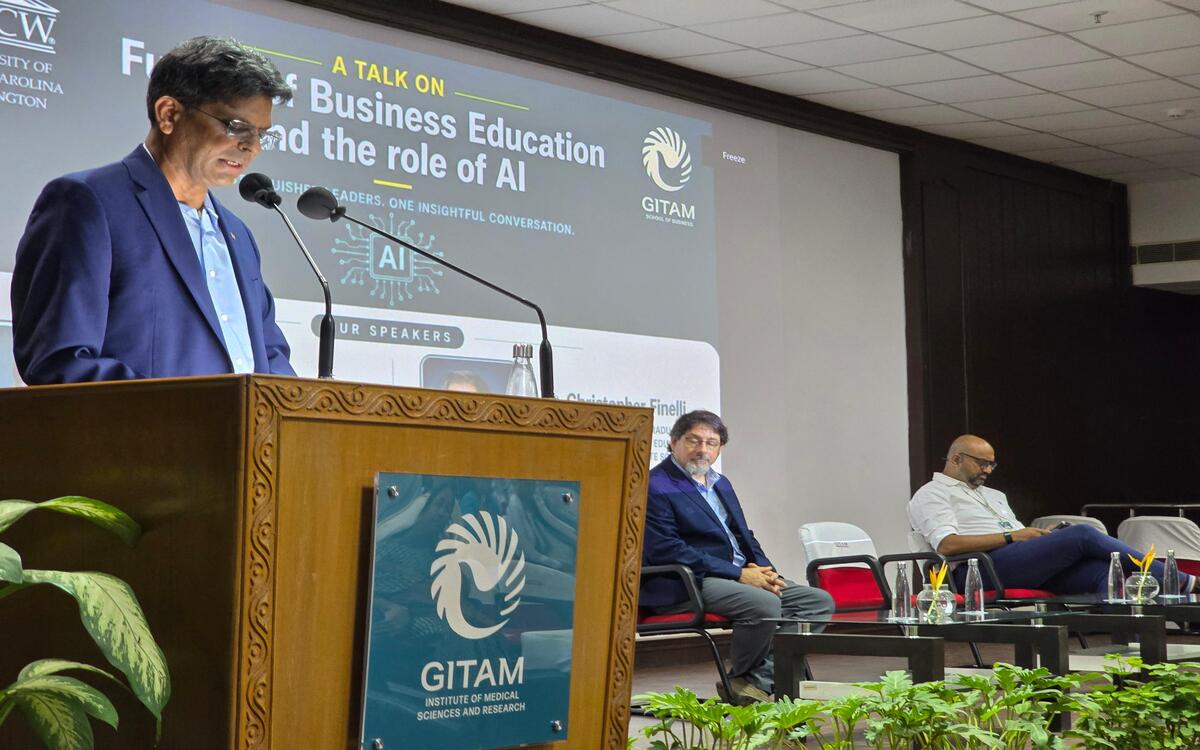
AI Can’t Replace Human Values: UNCW Chancellor
Artificial Intelligence (AI) has the power to transform industries, but it can never replace human creativity, ethical judgment, leadership, empathy, or the ability to build meaningful relationships, University of North Carolina Wilmington (UNCW) Chancellor Dr. Aswani K. Volety said. He encouraged students to prepare themselves for a fast-changing global business environment.
Dr. Volety was speaking at an interactive session for newly admitted MBA and BBA students organised by the GITAM School of Business on Wednesday. The session also featured Dr. Christopher Finelli, Associate Provost for Graduate and Lifelong Education and Dean of the Graduate School at UNCW.
Speaking about AI’s growing role in business, education, and society, Dr. Volety urged students to keep learning, stay adaptable, and embrace innovation. He said that while AI is changing the way people work, long-term success will depend on combining technical skills with human qualities that technology cannot replace.
Dr. Finelli described AI as a tool that supports, rather than replaces, human abilities. He stressed the importance of lifelong learning, interdisciplinary knowledge, and strong people skills. He added that curiosity, critical thinking, teamwork, and resilience will continue to be essential qualities for entrepreneurs and business leaders.
GITAM School of Business Dean Prof. Raja Phani Pappu encouraged students to use AI responsibly while improving their problem-solving skills, creativity, and ethical values. He reaffirmed the institution’s commitment to providing globally relevant education through international collaborations, industry partnerships, and innovative teaching methods.
The speakers said that future professionals should develop multidisciplinary knowledge, digital literacy, analytical thinking, emotional intelligence, an understanding of sustainability, and an entrepreneurial mindset. They also encouraged students to take up internships, participate in research, and explore global collaborations to broaden their outlook and strengthen their leadership skills.
The session ended with an interactive question-and-answer session, where students discussed topics such as artificial intelligence, entrepreneurship, global career opportunities, and the future of business leadership with the speakers.