


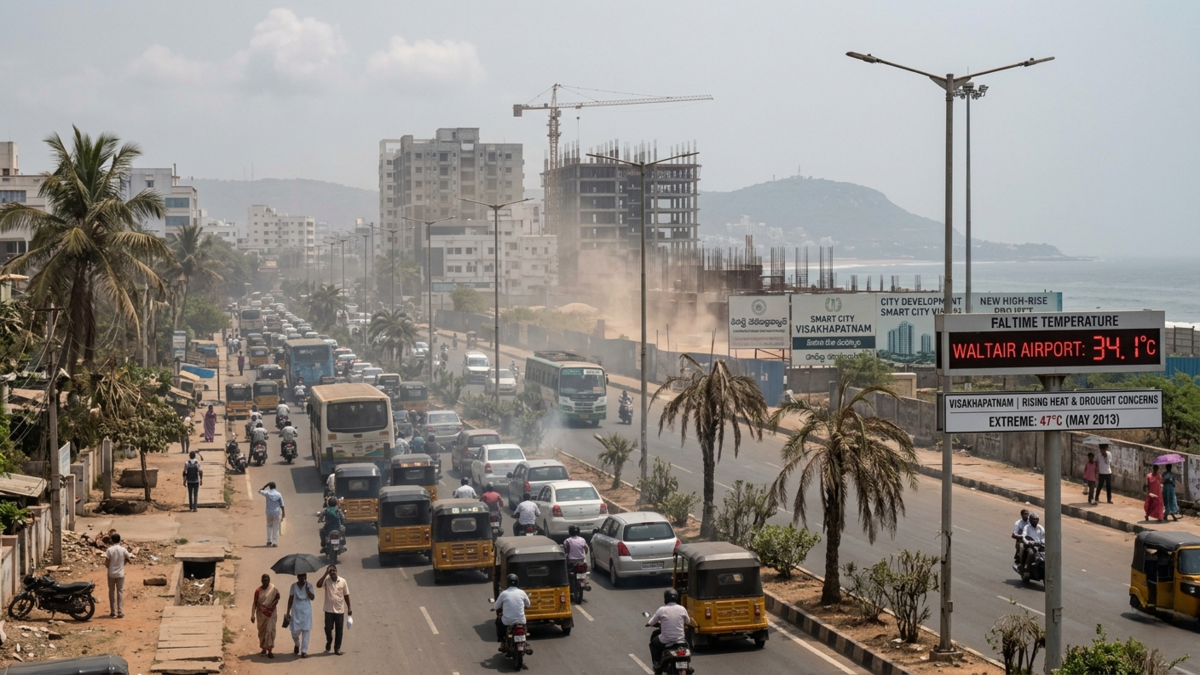
Visakhapatnam records rising temperatures and lower rainfall
The coastal city is seeing a rise in temperatures, along with a decline in rainfall, raising concerns about changing weather patterns and environmental stress.
Increasing vehicle use, construction activity, and industrial emissions are adding to pollution levels. As a result, hot and humid conditions now persist throughout most of the year, except during winter. Water resources are also under pressure.
Meteorological records show a steady increase in temperatures over time. At Waltair, the average minimum temperature between 1973 and 2021 was 24.7°C, and the average maximum was 30.9°C. At the airport, between 1969 and 2021, the average minimum was 24.1°C, and the average maximum was 32.9°C.
The city has recorded extreme temperatures in the past. The highest recorded temperature was 47°C on May 25, 2013. Other high readings include 44.9°C in 1978 and 40.5°C in 1965. These figures indicate a clear upward trend in temperature.
This year, summer conditions began earlier than usual, with high temperatures starting in the third week of February instead of March. The city is also experiencing hot days and cooler nights, which differs from typical seasonal patterns.
Rainfall patterns are also changing. The annual average rainfall for Visakhapatnam is around 1120 mm, but recent trends show uneven distribution across seasons. Rainfall has increased in some periods but has declined during key seasons, such as the monsoon and pre-monsoon.
Earlier, the city used to receive regular rainfall and cloudy weather. That pattern is now less common, even during the monsoon season. Experts say the drop in rainfall and changes in seasonal patterns are contributing to the rise in temperature.
They caution that if these trends continue, the city may face more extreme heat and greater environmental challenges in the coming years.