


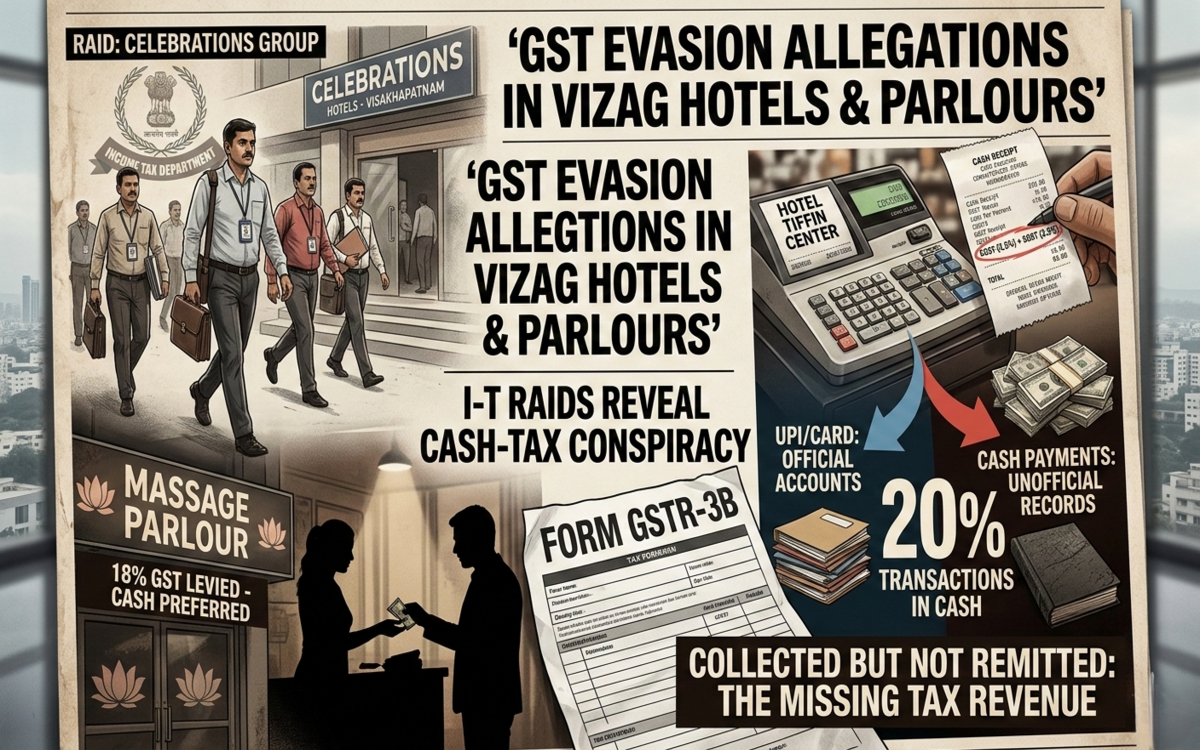
GST Evasion Allegations Surface in City Hotels, Eateries
Allegations of Goods and Services Tax (GST) evasion have surfaced against some hotels, tiffin centres, and massage parlours in the city, with claims that certain establishments are collecting GST from customers but not remitting the entire amount to the government.
Sources said hotels, tiffin parlours, and curry points are required to collect 5% GST from customers, while massage centres levy 18%. However, in some cases, the tax collected is allegedly not being deposited fully into the government treasury.
The issue has come into focus following raids conducted by Income Tax Department officials at four hotels belonging to the Celebrations Group in Visakhapatnam on Sunday in connection with alleged GST evasion.
Visakhapatnam, which hosts several Central and State government institutions, industries, and reputed educational establishments, also attracts a steady stream of tourists, resulting in high patronage for hotels and eateries across the city.
Under the GST regime introduced under the “One Nation, One Tax” framework, businesses such as hotels and eateries are required to register under GST and collect tax according to their category. Establishments must issue computerised bills indicating the Central GST (CGST) and State GST (SGST) components.
However, sources alleged that some establishments maintain parallel accounts to avoid reporting the full extent of transactions. While payments made through UPI and card are reportedly recorded in official accounts, cash payments are allegedly routed through unofficial records so that they do not come under the scrutiny of tax authorities.
Sources said nearly 20% of daily transactions in such establishments are carried out in cash. In some cases, though printed bills are issued, the transaction data is allegedly removed from computer systems later, making it difficult for GST authorities to track them.
Similar practices are suspected in some massage parlours, where customers largely make payments in cash. It is alleged that operators do not always enter such transactions into their systems, keeping them outside official records.
Observers say stricter inspections and audits by authorities could help detect such irregularities and ensure better compliance with GST regulations.