


India Strengthens Naval Power with Cutting-Edge Tunnel in Visakhapatnam
Defence Minister Rajnath Singh on Friday laid the foundation stone for a cutting-edge Large Cavitation Tunnel (LCT) at the Naval Science & Technological Laboratory (NSTL), marking a significant step in strengthening India’s naval capabilities.
The LCT is designed to be a unique global facility, capable of simulating both submarine operations and surface ship behavior in a single setup. Once operational, it will provide precise hydrodynamic validation for key naval platforms, including destroyers and aircraft carriers.
Speaking to scientists and defence personnel, Mr. Singh said the facility will enable India to design, develop, and test advanced naval equipment and propulsion systems indigenously. “It will help reduce noise, enhance stealth, and ensure that India no longer relies on foreign nations for critical hydrodynamic testing,” he added.
The Defence Minister emphasized that the project reflects the government’s push for technological self-reliance under Prime Minister Narendra Modi’s Aatmanirbhar Bharat initiative. He praised the efforts of domestic industries, MSMEs, and researchers in overcoming technical challenges to make the facility a reality.
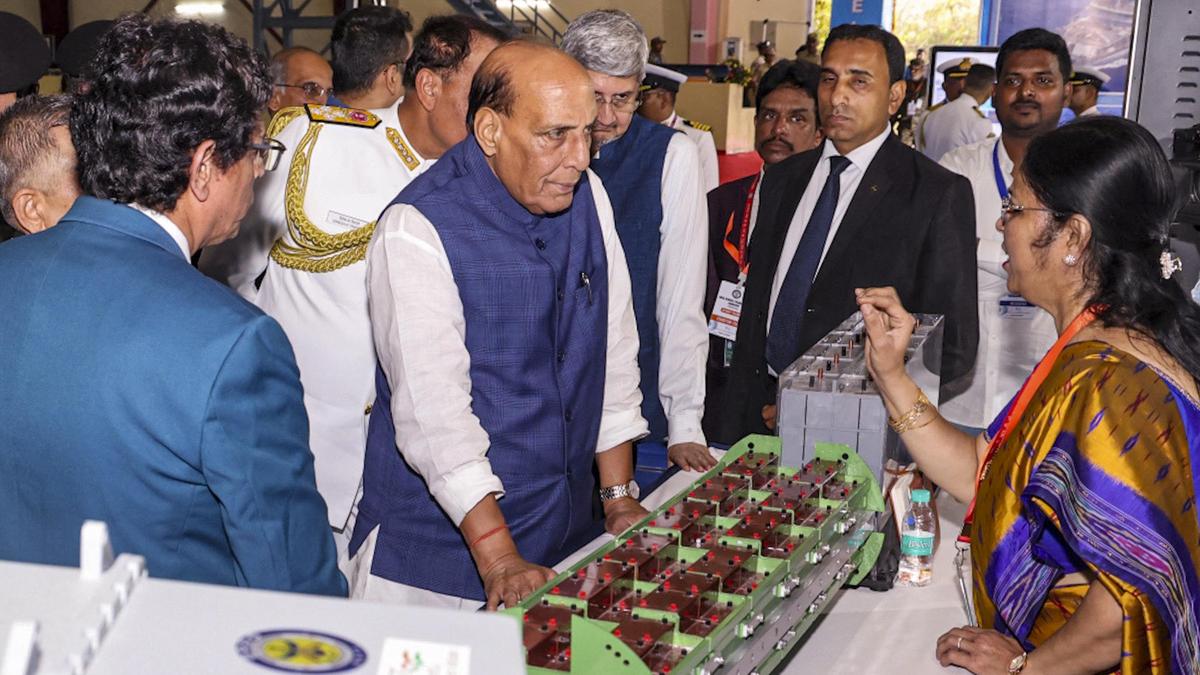
During his visit, Mr. Singh was briefed on ongoing defence R&D programs by Samir V. Kamat, Secretary of the Department of Defence R&D and Chairman of DRDO. He also inspected spin-off technologies from the Naval Systems Materials cluster and highlighted the strategic importance of lithium-ion battery development for future warfare readiness.
The ceremony was attended by Chief of Defence Staff General Anil Chauhan, Chief of Naval Staff Admiral Dinesh K Tripathi, and senior officials from the Eastern Naval Command. The project is expected to be a cornerstone in India’s journey toward advanced, self-reliant maritime defence.