

AU Study Identifies Deadly Rip Current Zones Along Vizag Coast
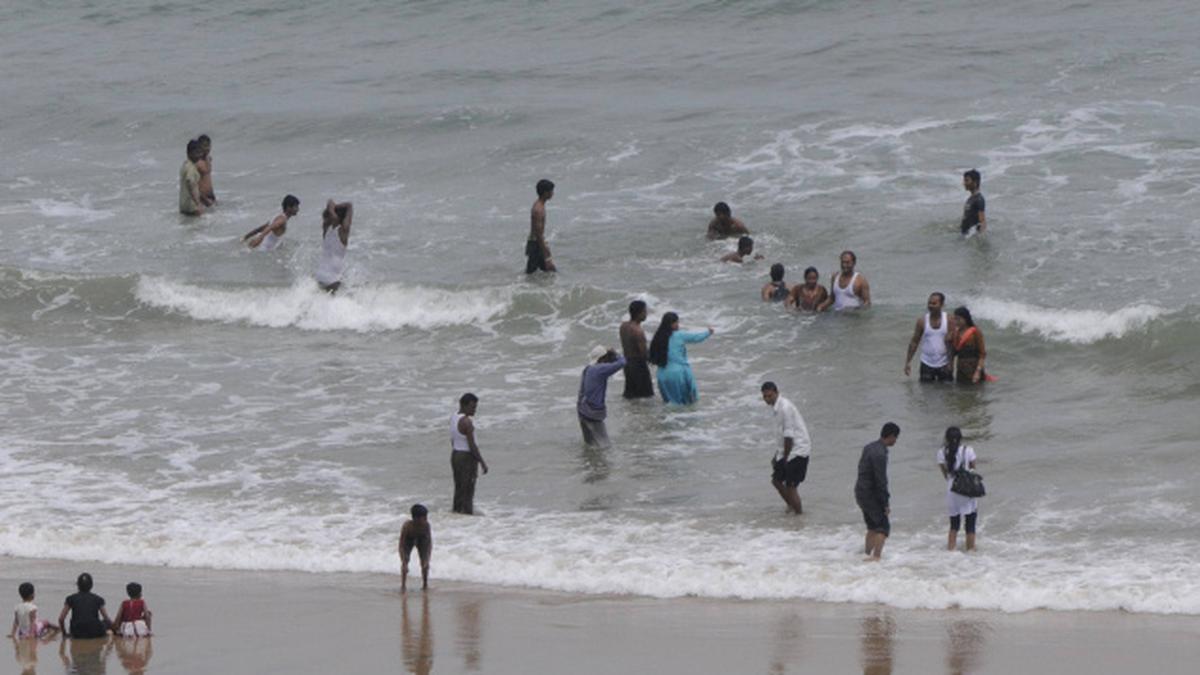
A new study by researchers at Andhra University has identified dangerous rip current hotspots along the Visakhapatnam coastline, shedding light on one of the leading causes of drowning incidents at the city’s popular beaches.
The research, conducted by doctoral scholar Chintam Venkateswarlu from the university’s Department of Atmospheric and Ocean Sciences, comes amid growing concerns over beach safety after hundreds of drowning cases were reported over the past two decades.
According to police data examined during the study, more than 400 people drowned between 2000 and 2023 at RK Beach and Rushikonda Beach, two of the city’s busiest tourist destinations.
Rip currents, often described as narrow channels of fast-moving water flowing away from the shore, are notoriously difficult to identify with the naked eye. Swimmers caught in them are frequently pulled away from the coastline within seconds, leading to panic and exhaustion.
Using numerical modelling and satellite imagery, the researcher carried out nearly 800 simulations at RK Beach and about 1,500 simulations along the Rushikonda coastline to study how rip currents form and behave under varying ocean conditions.
The findings suggest that wave direction and seabed topography play a decisive role in the formation of rip currents, while wave height, wave period, and tidal conditions influence their strength. The study found that rip currents are most likely to occur at RK Beach when wave directions range between 110 and 180 degrees, and at Rushikonda Beach when they range between 40 and 170 degrees.
The research also assessed the annual risk pattern along the Visakhapatnam coast, identifying 122 high-risk days, 213 moderate-risk days, and 30 low-risk days for rip current activity.
Researchers said the findings could support coastal authorities in improving warning systems, deploying lifeguards more effectively, and increasing public awareness at vulnerable beach locations.
Venkateswarlu advised beach visitors to remain calm if caught in a rip current and swim parallel to the shoreline rather than attempting to fight the current directly. The study earned him the Best Researcher Award during the centenary celebrations of Andhra University.