


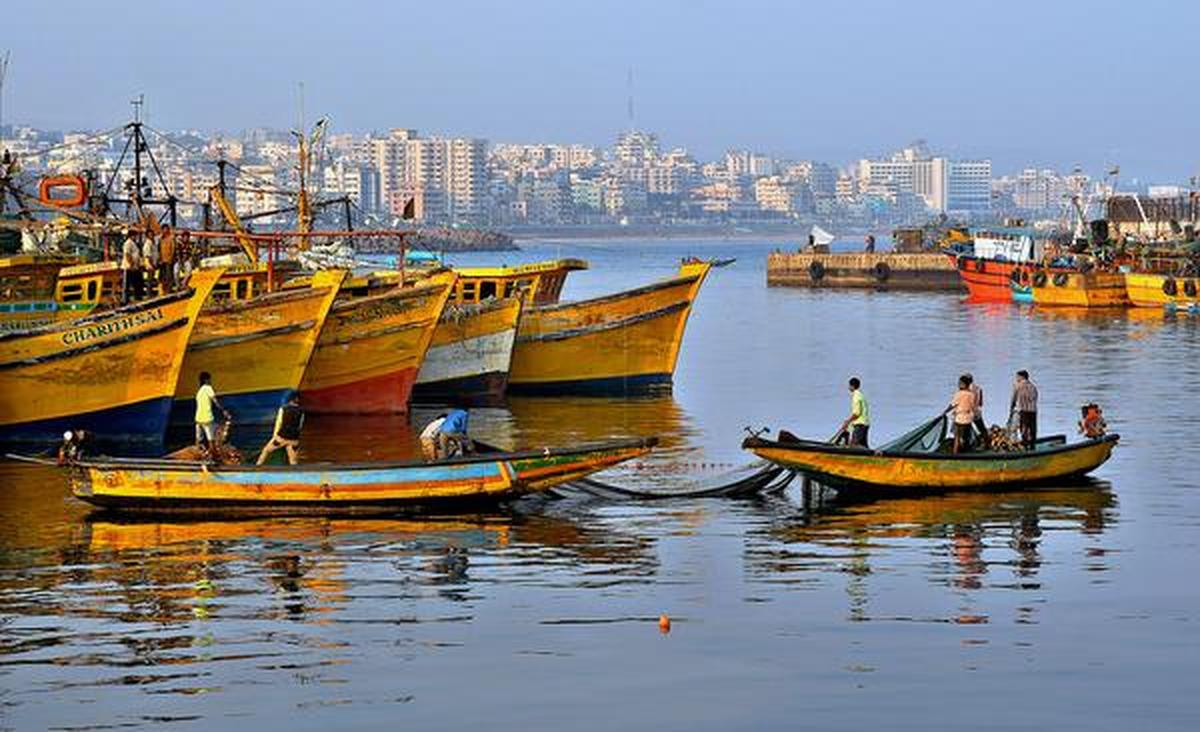
Most AP fishermen keep transponders switched off, officials concerned
Despite being equipped with vessel-tracking transponders, a majority of mechanised fishing boats operating off the Andhra Pradesh coast continue to keep the devices switched off while at sea, raising concerns over maritime safety and accidental crossings of international waters.
Officials said the two-way communication transponders were installed to track fishing vessels, facilitate rescue operations during emergencies and alert fishermen and authorities when boats approach or cross the International Maritime Boundary Line (IMBL). However, the non-use of the devices has contributed to repeated instances of Andhra Pradesh fishermen being detained by neighbouring countries after inadvertently crossing maritime boundaries.
According to the Fisheries Department, around 2,500 mechanised fishing boats operate from fishing harbours across the State, with more than 90% fitted with transponders. Field inspections, however, revealed that many fishermen switch off the devices during fishing voyages.
Inspector General of Police (Visakhapatnam Range) and Additional Director General of Coastal Security Gopinath Jatti said nearly 90% of fishermen were not using the transponders while at sea, limiting the effectiveness of the tracking system.
“We have been conducting awareness programmes to encourage fishermen to keep the transponders operational during every voyage,” he said.
Fishermen attributed the practice to technical constraints. Surada Satyanarayana, a fisherman at the Visakhapatnam Fishing Harbour, said the transponders consume battery power and interfere with VHF radio communication, which is crucial during extended fishing trips lasting 12 to 15 days.
He said fishermen had requested the Fisheries Department to provide a separate battery for the transponders at a subsidised cost.
Officials said the government plans to make the use of transponders mandatory on mechanised fishing vessels to minimise inadvertent border crossings and improve emergency response at sea.