


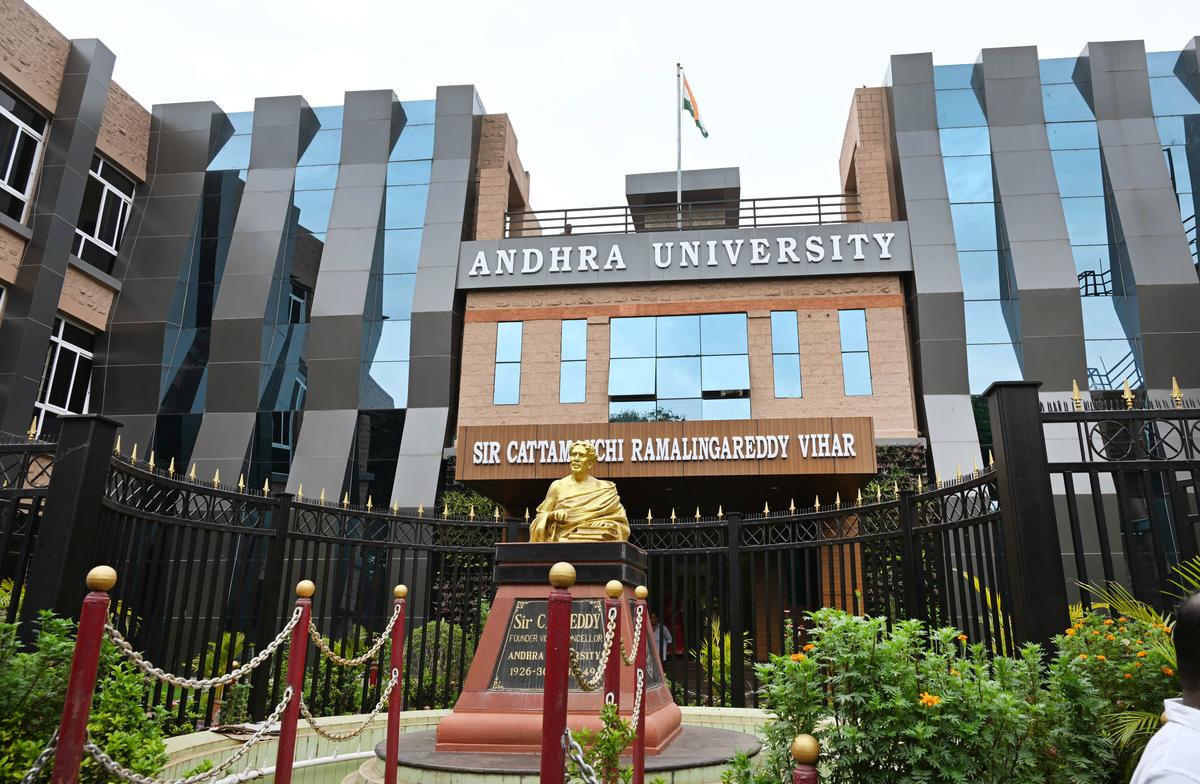
Andhra University at 100: Legacy, Reforms and Global Push
As Andhra University enters its centenary year, the focus is as much on celebrating its historical legacy as it is on preparing for the next phase of growth in an increasingly competitive global higher education landscape.
Established in 1926 during the Madras Presidency, Andhra University was among the early institutions set up to address the educational aspirations of the Andhra region. After shifting to Visakhapatnam in 1929, it grew into a major public university with a wide academic base and a large network of affiliated colleges.
Marking 100 years, the university has lined up a series of academic, cultural, and outreach programmes through April, culminating in the official centenary day later this month. A three-day cultural festival beginning April 6 is expected to draw participation from students across campuses, alongside seminars and policy discussions involving educationists.
Vice-Chancellor G.P. Rajasekhar said the milestone offers an opportunity to recalibrate institutional priorities. “The centenary is not just about looking back. It is about positioning Andhra University for the future, especially in terms of research, innovation, and global engagement,” he said.
University officials said the centenary year will anchor a broader reform agenda, including improving research output, expanding interdisciplinary programmes, and strengthening industry linkages.
According to higher education expert Prof. K. Venkata Subba Rao, legacy institutions need to adapt to remain competitive. “Institutions like Andhra University have strong foundations, but they must now invest in emerging disciplines and global collaborations to stay relevant,” he said.
Among the proposals under consideration are a “100 patents drive”, new research centres, and incubation facilities aimed at fostering innovation and entrepreneurship on campus.
Parallel to academic reforms, the university is also focusing on infrastructure development and conservation. Plans include the construction of a centenary hall and the restoration of heritage structures within the campus.
Urban policy analyst Dr. Meera Krishnan said such efforts must strike a balance. “Expansion is necessary, but it should not come at the cost of heritage. Universities like Andhra University are important cultural landmarks as well,” she said.
The centenary has also renewed focus on alumni engagement, with the university looking to tap into its global network for funding and collaboration.
Education commentator R. Suresh said alumni involvement could be a key driver of change. “Strong alumni networks can support research, infrastructure, and international visibility. That is an area where Andhra University can build momentum,” he said.
As Andhra University approaches its 100-year milestone, the celebrations underscore both its historical contribution and the challenges ahead.
With a renewed emphasis on research, global partnerships, and institutional reform, the university is aiming to evolve from a regional academic centre into a globally connected institution, setting the tone for its next century.