


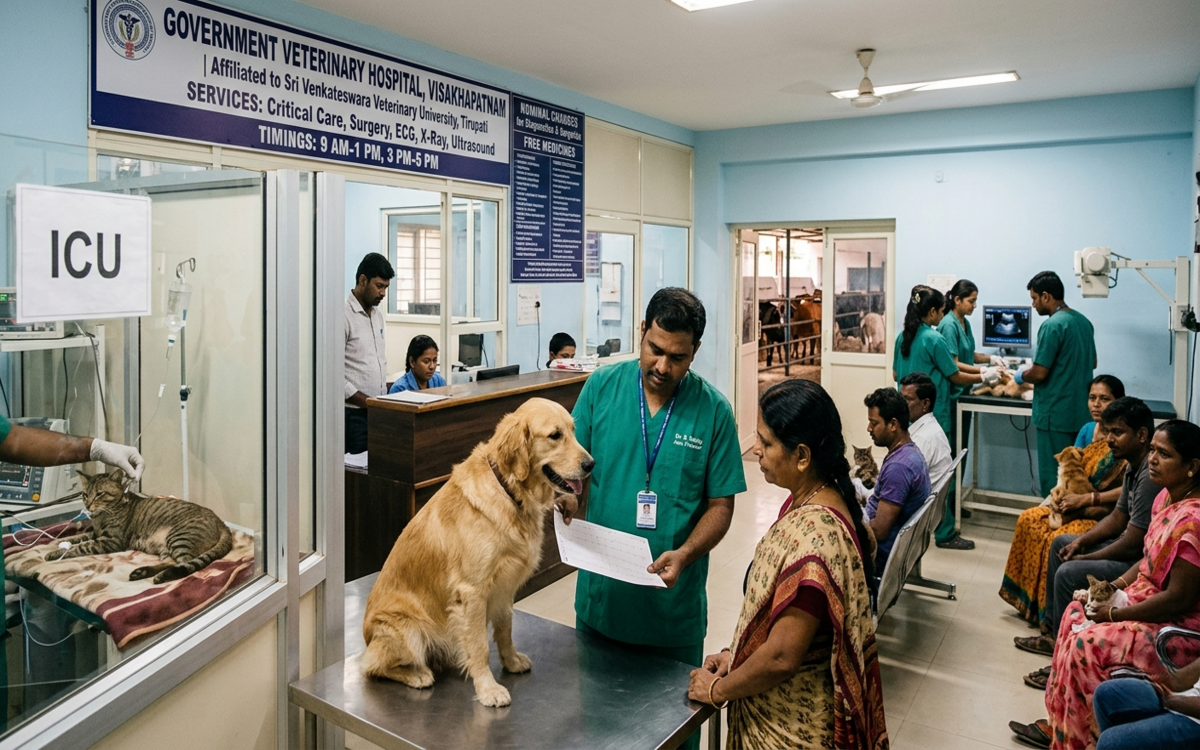
Life-Saving Care for Pets at Vizag Veterinary Hospital
In a significant boost to veterinary healthcare, a government-run veterinary hospital in Visakhapatnam has successfully handled complex, life-threatening cases in pets, underlining the growing sophistication of animal care in the region.
A two-year-old pet cat diagnosed with a cancerous tumour in the heart was saved through a rare surgery, followed by chemotherapy, at the facility near the Judge’s Court. In another case, a seven-year-old pet dog suffering from a serious cardiac condition recovered after timely surgical intervention.
Officials said the hospital, affiliated with Sri Venkateswara Veterinary University, Tirupati, has been witnessing an increase in critical cases involving pets and other animals. The centre caters to a wide range of animals, including cattle, domestic pets, and even monkeys, offering both advanced diagnostic and surgical care.
With infrastructure such as an intensive care unit (ICU), X-ray, ultrasound scanning, and ECG, the hospital is equipped to manage complex conditions ranging from cancer to cardiac, respiratory, neurological, and digestive disorders. Veterinary experts have noted a rising trend in cancer-related ailments, particularly among dogs.
Despite offering free medicines and vaccinations, the hospital levies nominal charges for diagnostic tests and surgeries as per university guidelines, making advanced treatment accessible to a wider section of pet owners.
The facility operates daily from 9 a.m. to 1 p.m. and 3 p.m. to 5 p.m., and remains open even on Sundays and public holidays, ensuring uninterrupted services.
However, doctors flagged the absence of a dedicated animal blood bank as a critical gap. “In several cases, animals develop anaemia and require urgent transfusions. Currently, we depend on donor animals brought in by owners. With multiple blood groups in animals, a proper blood bank is essential,” said Dr. Basava Reddy, Assistant Professor.
He also urged pet owners to take precautions during the ongoing summer, including protecting animals from heat exposure, ensuring frequent hydration, and seeking immediate medical attention in cases of vomiting or diarrhoea.