


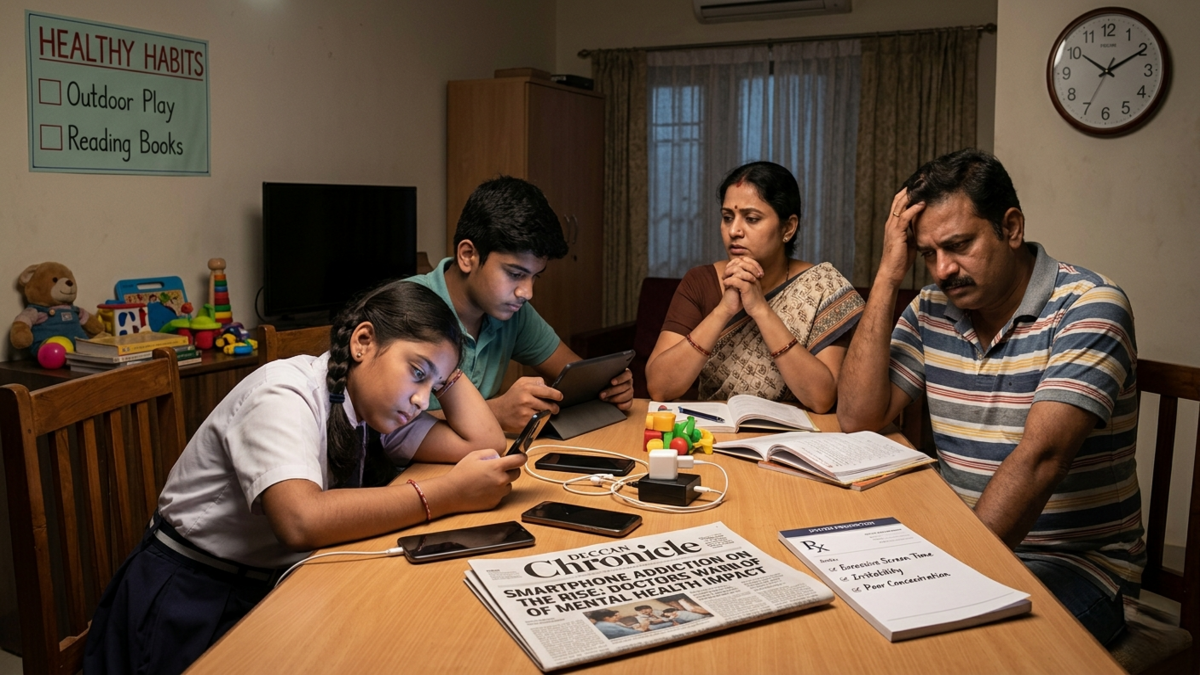
Screen addiction among children triggers alarm in city
A sharp rise in smartphone addiction among children and adolescents is drawing serious concern from health experts, who warn of its wide-ranging consequences for behavioural and mental health.
Doctors in the city have reported a steady increase in cases linked to excessive use of social media and short-form video platforms. A Class VI student from MVP Colony was brought in for medical consultation after her parents observed marked behavioural changes.
The child, who was initially given a smartphone for online classes, saw her daily screen time escalate from approximately 30 minutes to nearly six to seven hours. Physicians noted a decline in concentration, heightened irritability, and deterioration in academic performance, attributing these developments to prolonged and unregulated screen exposure. Timely corrective intervention was advised.
In a second instance, a Class IX student from Madhurawada developed a comparable dependence, spending most of his waking hours on his device. Repeated parental warnings proved ineffective, and when restrictions were enforced, he left home. He was subsequently traced and returned, whereupon his parents discovered he had been accessing inappropriate content. He is presently receiving counselling.
Experts attribute the trend to the addictive structure of short-form video content, which tends to encourage prolonged and repetitive viewing. Many children have become heavily reliant on mobile devices, with some refusing to eat or engage in routine activities without them.
Medical professionals caution that excessive screen time may result in eye strain, diminished attention span, poor academic outcomes, and behavioural disturbances, including irritability and heightened stress levels. Prolonged exposure carries additional risks such as sleep disorders, memory impairment, and compromised brain development; in younger children, delayed speech development has also been observed.
Experts have underscored the urgent need for active parental supervision, consistent monitoring of screen usage, and the encouragement of outdoor activities and healthy offline engagement.