


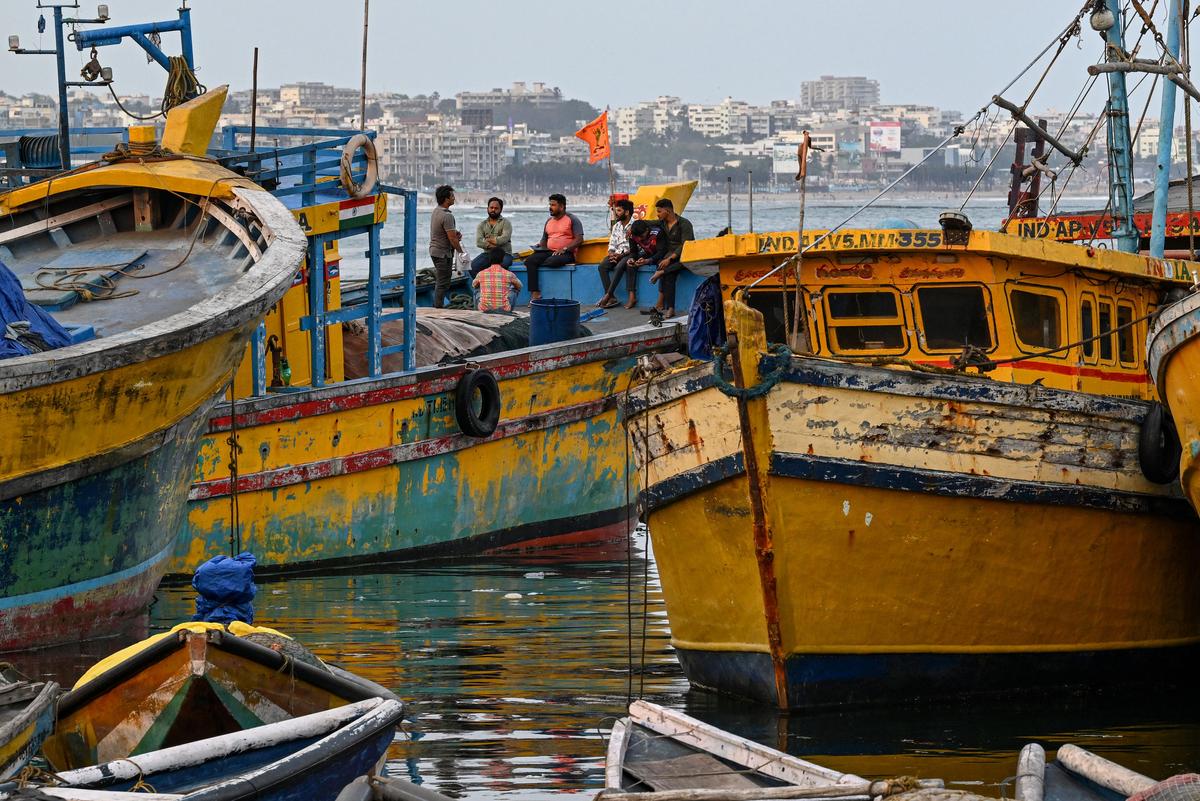
Fishing boat accidents expose gaps in marine safety enforcement
A spate of fishing boat accidents off the Visakhapatnam coast, including the Gangavaram Port tragedy earlier this month that claimed six fishermen’s lives, has brought the enforcement of marine safety regulations in Andhra Pradesh under scrutiny.
Unlike motor vehicles, which are subject to strict licensing, insurance, and safety checks, marine fishing vessels are reportedly monitored less rigorously, raising concerns over compliance with safety norms at the State’s fishing harbours.
In the Gangavaram accident, six fishermen drowned after their boat sank. The lone survivor and boat owner, Kari Chinna, said the families of the deceased received an ex gratia of ₹10 lakh each from the government, but he had yet to receive compensation for the loss of his vessel.
In another recent incident, a fishing boat capsized near the Visakhapatnam breakwaters, injuring two fishermen. The owner estimated his losses at ₹2 lakh for the boat and ₹2.5 lakh for fishing nets, and sought financial assistance from the government.
Under the Andhra Pradesh Marine Fishing Regulation (APMFR) Act, every marine fishing vessel must be registered with the Fisheries Department and possess a valid licence. Registration and licence renewals are permitted only after authorities certify that the vessel is seaworthy and equipped with the prescribed safety gear.
Before every voyage, boat owners must also notify the nearest Sagara Mitra centre with details of the vessel, crew, fishing zone, and fuel carried. The rules further mandate life jackets for all crew members, firefighting equipment, and valid insurance coverage.
However, officials and stakeholders say compliance remains patchy. Several boats operating from Visakhapatnam, including those from Kerala and Tamil Nadu, are reportedly not registered locally. Unlike motor vehicles, fishing boats are seldom subjected to systematic safety inspections before venturing into the sea.
Stakeholders attribute the gaps to inadequate inspections and limited awareness among sections of the fishing community about the importance of life-saving equipment and insurance. Many fishermen, they say, continue to rely on experience and swimming skills instead of adhering to mandatory safety measures.
Marine safety experts have called for stricter enforcement of existing regulations, arguing that mandatory use of life jackets, regular inspections, and comprehensive insurance coverage could reduce fatalities and provide financial protection to affected families.
Meanwhile, the State government continues to provide financial assistance during the annual fishing ban. Under the existing scheme, six fishermen attached to each registered fishing boat receive ₹20,000 each, totaling ₹1.2 lakh per boat, regardless of the vessel’s value.