


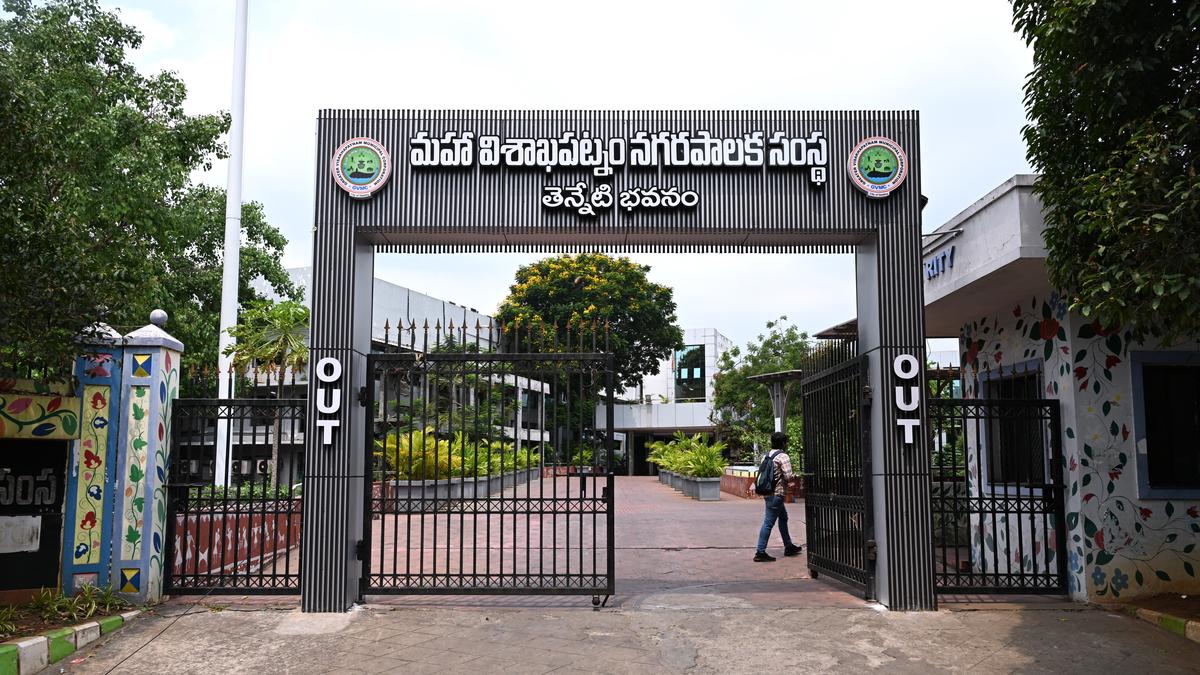
GVMC draws up long-term plan to secure Visakhapatnam’s water supply
The Greater Visakhapatnam Municipal Corporation (GVMC) has started work on a long-term water security plan as inadequate rainfall during the southwest monsoon raises concerns over the city’s water supply.
The civic body currently supplies about 410 million litres per day (MLD) against a demand of around 473 MLD, leaving a shortfall of nearly 63 MLD. It draws water from the Yeleru, Raiwada, Tatapudi, Meghadrigedda and Mudasarlova reservoirs, along with infiltration wells along the Godavari and Gosthani rivers.
Declining reservoir storage and groundwater levels have prompted the GVMC to explore additional sources. The existing shortfall has also led to changes in water allocation to industries.
Officials expect demand to increase as IT and other companies expand operations in and around Visakhapatnam.
A joint study by a Singapore-based Water Centre and Australia-based ISF has projected that the city’s water requirement could reach 726 MLD by 2047. It recommended strengthening existing sources and developing new ones to meet future demand.
GVMC Commissioner Ketan Garg has directed officials to examine measures to increase water availability and reduce wastage. Installing water meters and moving towards continuous water supply are among the measures under consideration.
60 MLD Polavaram proposal
The GVMC is examining a proposal to draw 60 MLD from the Polavaram Left Canal. Under the plan, water would be conveyed to the Kanithi Balancing Reservoir in Gajuwaka and then pumped to the Meghadrigedda reservoir.
From Meghadrigedda, the water would be taken to a proposed treatment plant at Mudasarlova before being supplied through pipelines to Madhurawada. The engineering wing has been asked to prepare a detailed proposal.
Treated wastewater for industries
The GVMC is also considering supplying treated wastewater to industries to reduce their dependence on freshwater. The proposal includes treated water from the 90 MLD Narava Sewage Treatment Plant (STP) and the 30 MLD STPs at Appughar and in the Old City.
Water from proposed STPs at Kapuluppada, being developed under the underground drainage project for Madhurawada, could also be used. The civic body is also examining the feasibility of a 100 MLD desalination plant at Appikonda to convert seawater into potable water.
Ketan Garg has directed officials to speed up preparations and draw up an integrated action plan covering the proposed projects, funding requirements and implementation. The plan will also focus on limiting the financial burden on the civic body.