


The Good Samaritan Driver
For most auto-rickshaw drivers, every trip begins with the expectation of a fare. For U. Sundar Rao, some journeys have always been about something far more important: making sure a woman reaches a hospital safely and on time.
For the past 26 years, the 48-year-old Visakhapatnam auto-rickshaw driver has been providing free transport to pregnant women, continuing a tradition of service that he inherited from his father.
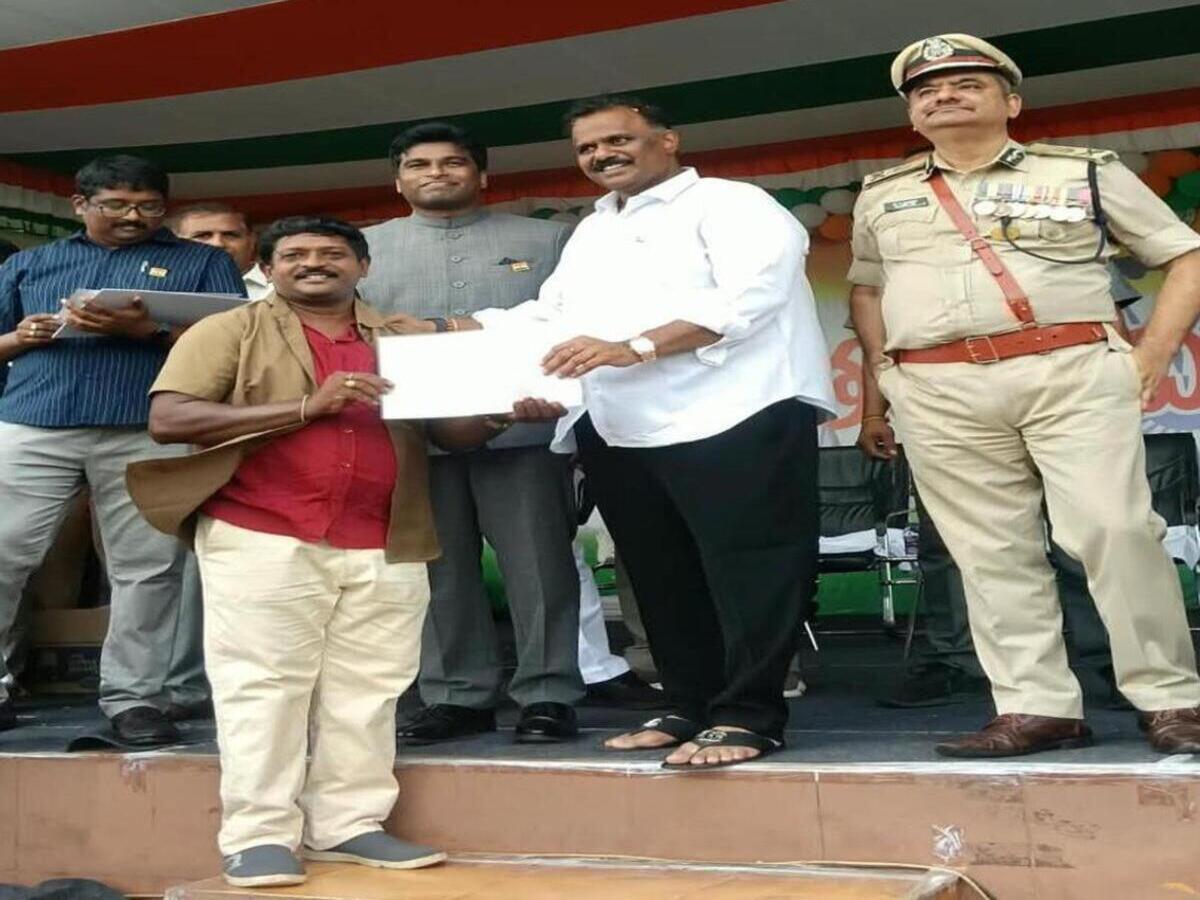
Since 2000, Sundar Rao has helped 9,423 pregnant women reach hospitals for delivery without charging them a single rupee. His service, carried out quietly despite his modest means of livelihood, recently earned him recognition from the district administration during the Independence Day celebrations.
But for Sundar Rao, the recognition is only a reminder of a responsibility he has carried for more than two decades.
A promise that began with his father
The roots of Sundar Rao’s service go back to the 1970s, when his father, U. Prakash, worked as a rickshaw-puller.
Those were years when travelling through the city was far more difficult than it is today. Roads were not always motorable, and emergency ambulance services were not readily available. For pregnant women, particularly those from economically weaker families, getting to a hospital on time could become a serious challenge.
Prakash saw the difficulty at close quarters and decided to help.
Whenever he came across a pregnant woman who needed to reach a hospital, he would offer to take her there without charging a fare. He continued the practice even after purchasing a three-wheeler in the 1990s.
His son grew up watching this simple act of kindness.
“When I saw my father helping people who were in need, I understood that service need not always involve money. Sometimes, simply being available at the right time can make a difference,” Sundar Rao recalls.
When he began driving his own auto-rickshaw in 2000, he decided to follow his father’s example.
A familiar number among ASHA workers
What began as an individual effort gradually became a dependable local service.
Over the years, Sundar Rao developed contacts with ASHA workers and Auxiliary Nurse Midwives (ANMs), who became aware of his willingness to transport pregnant women free of cost. Today, when a woman needs to be admitted to a hospital, a call from an ASHA worker is often enough for Sundar Rao to set out.
His service covers areas including NAD, Gopalapatnam, Pendurthi, Chinamushiwada and Marripalem.
“The government is taking care of pregnant women through ASHA workers and ANMs right from the first month of pregnancy. When a woman needs to be admitted to a hospital for delivery, ASHA workers from these areas call me. I reach the place and safely drop her at the hospital without charging anything,” he says.
The arrangement may sound simple, but for a family waiting anxiously for transport, a familiar driver who is willing to come without asking about the fare can be a source of considerable relief.
For Sundar Rao, there is also a practical satisfaction in knowing that he is complementing the work being done by frontline health workers.
9,423 journeys, and counting
Over 26 years, the numbers have quietly accumulated. 9,423 pregnant women have travelled in his auto to hospitals for delivery.
Each journey, he says, reinforces the reason he decided to continue his father’s work.
His service was recently acknowledged by the district administration led by Collector Abhishikt Kishore, who felicitated him during the Independence Day celebrations. Revenue Minister Anagani Satya Prasad also appreciated Sundar Rao’s gesture and hugged him in recognition of his contribution.
The public recognition brought attention to a service that had largely remained away from the spotlight.
Sundar Rao, however, is not looking for personal praise.
“My only aim is to see that other auto-rickshaw drivers too come forward and render some form of service to the public,” he says.
Service beyond the hospital
His willingness to help people does not end with transporting pregnant women. During Chandanotsavam and Margasira Masostsavams, Sundar Rao also provides free transport to elderly and differently-abled persons, helping them attend the religious events without worrying about transportation costs.
For an auto-rickshaw driver whose daily income depends on the number of trips he makes, giving away rides for free may appear difficult. Yet Sundar Rao has continued to do so for more than two decades.
His story is not about a single act of kindness, but about a habit passed from one generation to the next.
His father began helping pregnant women when emergency transport was scarce. Decades later, Sundar Rao continues that work in a changing city, answering calls from ASHA workers and driving through its streets whenever someone needs a safe ride to a hospital.
For thousands of women and their families, his auto has been more than a vehicle. It has been a timely ride when every minute matters.
And for Sundar Rao, the journey that began with his father more than five decades ago is still continuing.