


Seawater intrusion, groundwater contamination threaten region: experts
Groundwater experts have cautioned that seawater intrusion along the Visakhapatnam coast, along with rising fluoride and nitrate levels in aquifers nationwide, threatens drinking water security without stricter regulatory intervention.
The observations were made during a joint training programme on “Integrated and Interdisciplinary Strategies for Sustainable Ground Water Development and Management”, organised by the Central Ground Water Department with the GITAM School of Science.
Presenting hydrogeochemical findings, Suresh Kumar Kolli said studies had established clear evidence of seawater intrusion along a 26-km stretch of the coast, attributing it to sustained over-extraction and rapid urbanisation. Chloride concentrations had peaked at 366 mg/L and total dissolved solids at 1,130 mg/L, resulting in aggressive, corrosive groundwater, he said.
He called for regulated abstraction caps and artificial recharge measures to prevent damage to public health and drinking water safety.
Nageswara Rao Elisela of the Central Ground Water Board spoke on the role of geophysical techniques in identifying sites for artificial recharge structures and mapping the interface between saline and fresh groundwater, calling both essential for effective flow management.
Turning to the wider national picture, Pankaj P. Bakshe said Indian groundwater faced a “dual hydrogeochemical crisis” — fluoride from natural rock weathering, and nitrate from excessive fertilizer use and inadequate sanitation infrastructure. He recommended isotopic forensics to trace contamination sources, along with precision nutrient management, better sanitation engineering, and community-level defluoridation systems.
Lakshmi Narayana Damodara, scientist, Central Ground Water Board, cited the Groundwater Resources Assessment of Andhra Pradesh (2025), noting that the State’s overall extraction stood at a safe average of 31.5%. However, severe localised depletion persisted in the Rayalaseema region and select coastal pockets, largely due to agriculture, which accounts for 85.7% of the State’s total groundwater draft.
The experts called for strict enforcement of the Andhra Pradesh Water, Land and Trees Act in over-exploited mandals, wider adoption of micro-irrigation, and sustained salinity monitoring along the coast to check further seawater ingress.
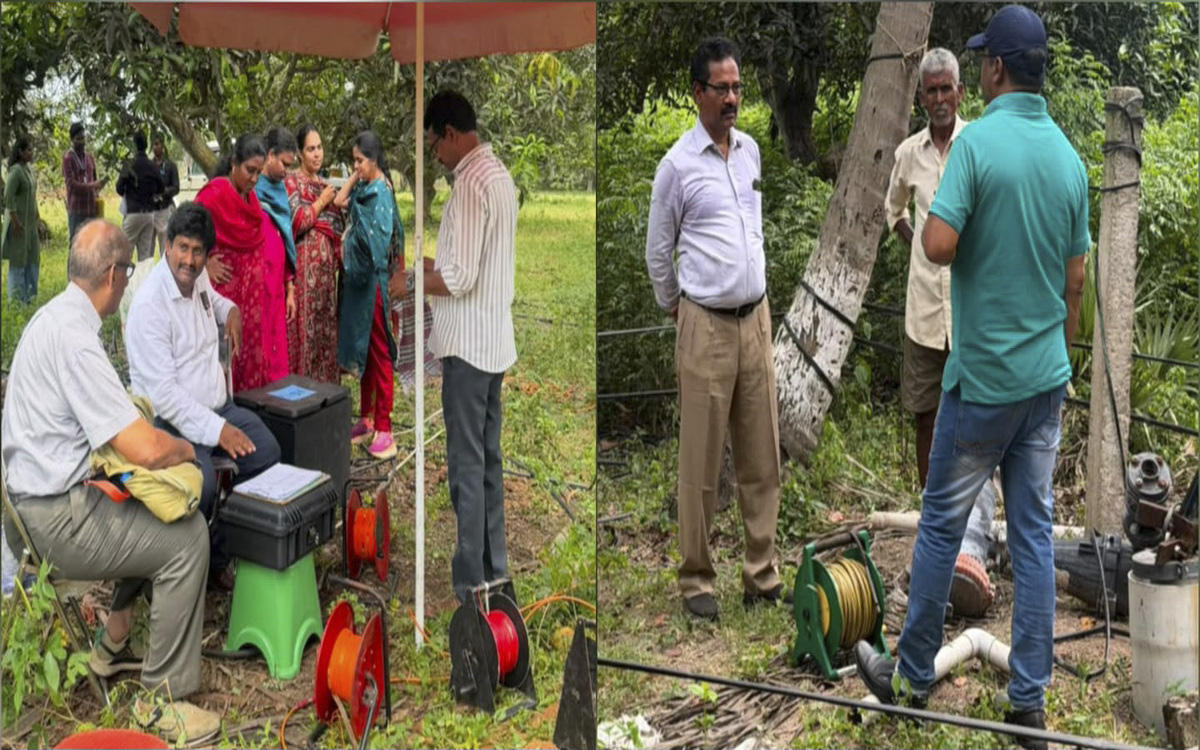
A field study was also conducted near Rushikonda, where officials demonstrated the scientific instruments used in groundwater assessment.
Ground Water under stress