


Thorium key to India’s long-term energy security, says nuclear scientist
India’s ability to reprocess spent nuclear fuel and eventually harness its abundant thorium reserves will be critical to its long-term energy security, said renowned particle physicist Prof. Naba Kumar Mondal.
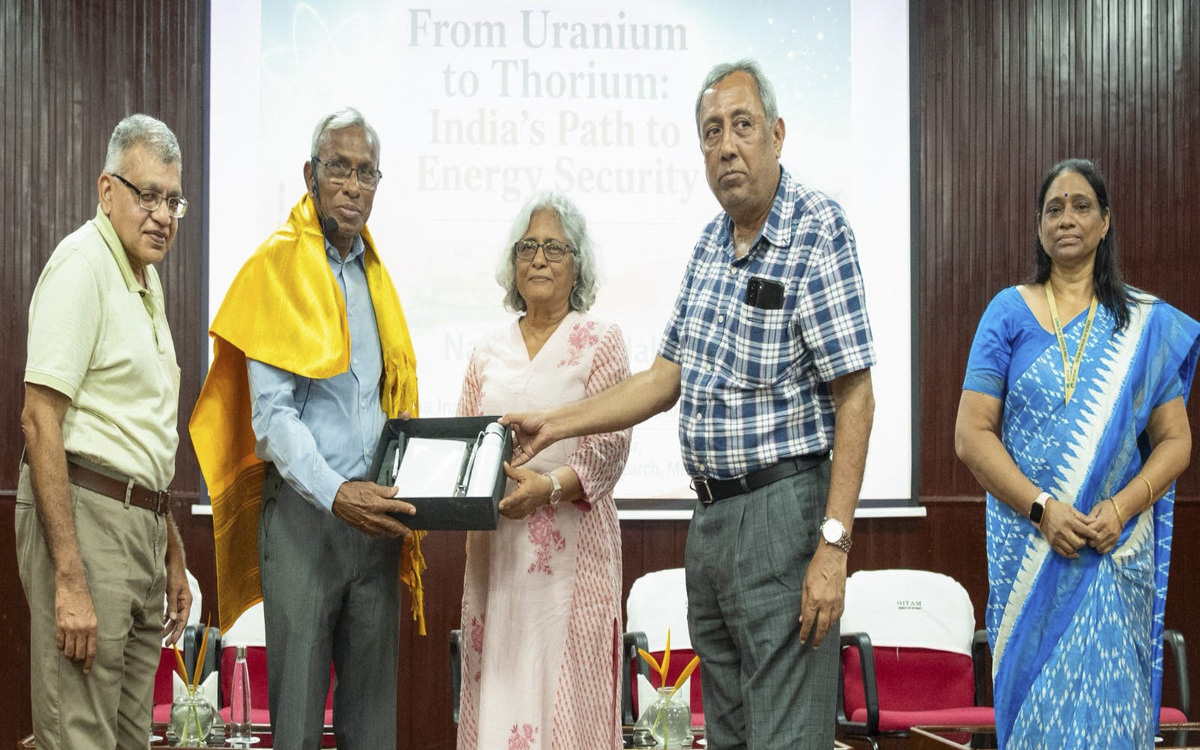
Delivering a lecture on “From Uranium to Thorium: India’s Path to Energy Security” at GITAM Deemed to be University here on Tuesday, Prof. Mondal said India had made significant progress in spent fuel reprocessing and in developing a closed nuclear fuel cycle.
Prof. Mondal, NASI Senior Scientist at the Saha Institute of Nuclear Physics, Kolkata, and former Project Director of the India-based Neutrino Observatory (INO), said reprocessing enabled the recovery and reuse of valuable nuclear materials and reduced the volume of radioactive waste requiring long-term management.
He described the achievement of criticality in the Prototype Fast Breeder Reactor (PFBR) as a major milestone in the country’s three-stage nuclear power programme.
The second stage, based on fast breeder reactors, is intended to produce additional fissile material, particularly plutonium, while facilitating the conversion of thorium into uranium-233 (U-233), the fuel envisaged for the third stage.
India’s three-stage programme envisages uranium-based reactors in the first stage, plutonium-based fast breeder reactors in the second and thorium-based U-233 fuel in the third. The programme seeks to eventually facilitate the large-scale utilisation of the country’s substantial thorium resources.
Prof. Mondal also spoke about advanced technologies such as Molten Salt Reactors (MSRs), which are being explored internationally for their possible role in the thorium-U-233 fuel cycle.
Nuclear energy could have applications beyond electricity generation, he said. Advanced high-temperature reactors could potentially support the production of low-carbon hydrogen.
The lecture focused on the need for a sustainable nuclear fuel cycle that would make efficient use of nuclear materials, reduce radioactive waste and provide a pathway for the eventual utilisation of thorium for energy generation.
GITAM University Centre for Interdisciplinary Research Distinguished Professor G. Ravi Kumar, GITAM School of Science Director Prof. C. Kavitha, and others attended the programme.