


₹180-cr weather lab opens at AU to decode coastal skies
In a boost to coastal weather research, Union Earth Sciences Secretary M. Ravichandran on Friday inaugurated the Open-Field Observatory of the Coastal Atmospheric Research Testbed (C-ART) at Andhra University.
The facility, established by the Indian Institute of Tropical Meteorology under the Centre’s Mission Mausam, entails an investment of ₹180 crore. Equipment worth ₹60 crore has already been installed, while the remaining ₹120 crore is slated for additional instrumentation and infrastructure.
The testbed houses advanced in-situ and remote-sensing instruments, including aerosol mass spectrometers, cloud condensation nuclei counters, ceilometers, and greenhouse gas analysers. Wind profilers and Doppler weather radars are also planned. Data generated at the facility will be integrated into national forecasting models.
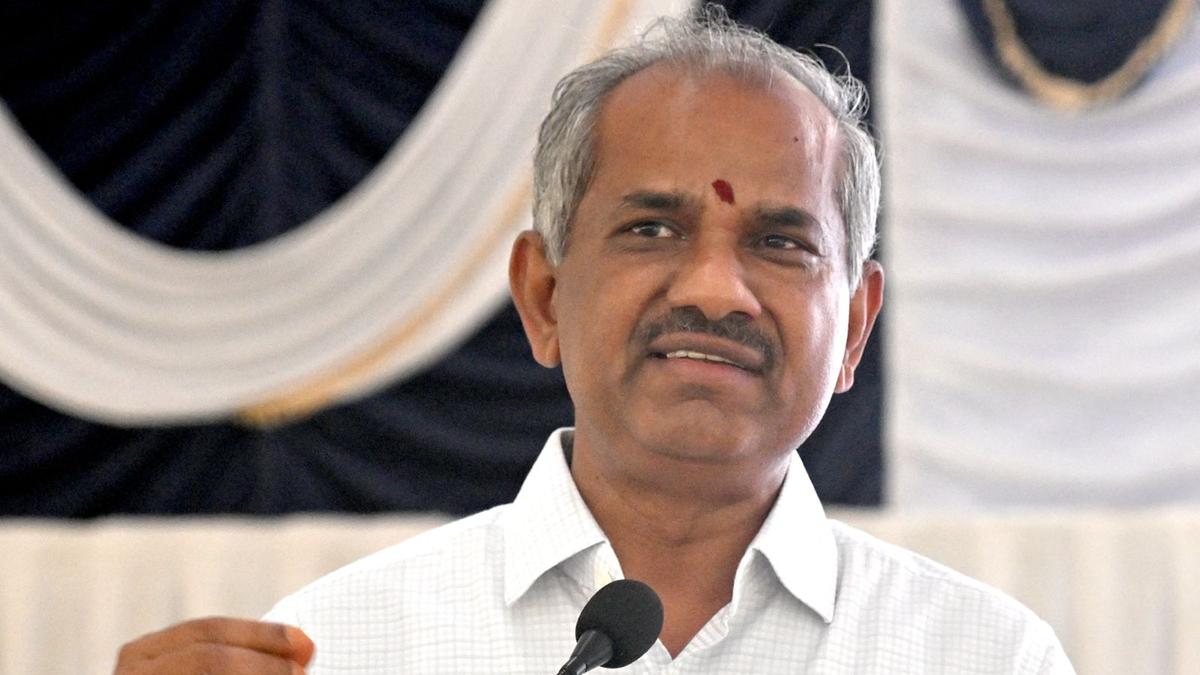
“Observational data is key to improving forecasts. Coastal prediction is far more complex due to land-ocean interactions. This testbed will help us study rapid weather variations and improve accuracy, particularly in the context of climate change,” Ravichandran said.
The project follows a memorandum of understanding signed between IITM and Andhra University in the presence of Vice-President C. P. Radhakrishnan during the university’s centenary valedictory ceremony. It is aimed at generating high-quality coastal weather and climate data for research and disaster risk reduction along the cyclone-prone coastline.
IITM Director A. Suryachandra Rao described the facility as a “frontline laboratory for coastal weather intelligence,” aligned with Mission Mausam’s goal of developing next-generation forecasting capabilities by 2047.
On the monsoon outlook, Ravichandran said rainfall this year is likely to be below normal at around 92 per cent of the long-period average, with early El Niño conditions potentially affecting precipitation during July and August.
Vice-Chancellor G. P. Raja Sekhar said the collaboration would strengthen research and capacity-building at the university.