


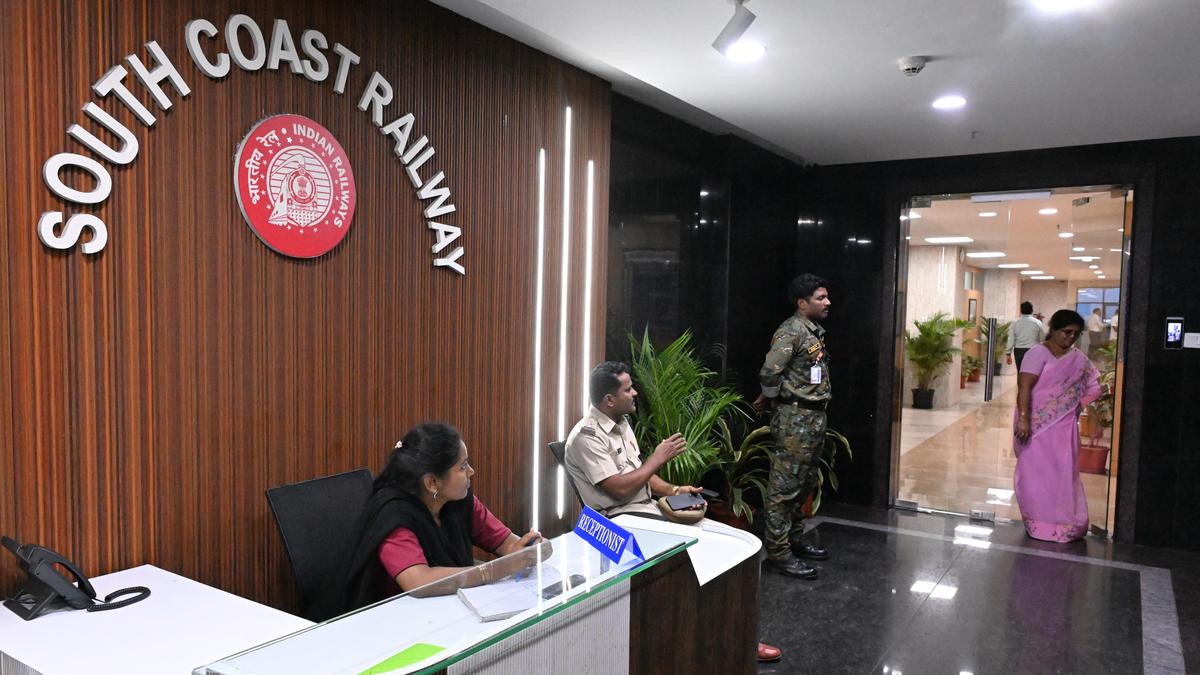
SCoR Zone to Commence Operations from June 1: BJP
The South Coast Railway (SCoR) Zone, headquartered in Visakhapatnam, will officially commence operations from June 1, BJP State president P.V.N. Madhav said on Saturday.
The SCoR, the country’s 18th railway zone, will oversee a rail network of 3,532 km. Including double and triple lines, the total track length under its jurisdiction will increase to 6,454 km.
In a statement, Mr Madhav said the zone would comprise four railway divisions: Visakhapatnam, formed following the reorganisation of the Waltair Division, Vijayawada, Guntur and Guntakal. Together, these divisions encompass 385 railway stations and employ approximately 62,000 personnel.
The headquarters will have a sanctioned strength of 128 gazetted officers and 1,100 non-gazetted staff.
The new zone is expected to handle nearly 100 million tonnes of freight annually. Revenue from passenger and freight operations is projected to reach around ₹15,500 crore per year.
Mr Madhav also highlighted the importance of the Vadlapudi railway wagon depot, which has the capacity to inspect, maintain and repair between 250 and 300 wagons every day.
The Union government announced the establishment of the South Coast Railway Zone on February 17, 2019. The proposal was subsequently approved by the Union Cabinet. Prime Minister Narendra Modi laid the foundation stone for the permanent headquarters complex at Mudasarlova on January 8, 2025.
The proposed 12-storey headquarters building, estimated to cost ₹183 crore, will be constructed on 52.2 acres. Designed in the shape of a cruise ship to reflect Visakhapatnam’s coastal identity, the facility will serve as the permanent headquarters of the zone. Until its completion, operations will be conducted from the VMRDA’s iconic building, The Deck.
The SCoR zone will primarily serve Andhra Pradesh while also covering parts of Karnataka and Tamil Nadu.
Expressing confidence in the initiative, Mr Madhav said the launch of the new zone would strengthen railway infrastructure in Andhra Pradesh, facilitate the introduction of additional train services, accelerate station and platform development, and boost economic growth, trade and employment opportunities across the region.