


Heatwaves raise ground-level ozone in Andhra Pradesh, says IIT Kharagpur study
Heatwaves in Andhra Pradesh are not only pushing up temperatures but also worsening air quality by increasing ground-level ozone, according to a study by researchers at the Centre for Ocean, River, Atmosphere and Land Sciences (CORAL) at the Indian Institute of Technology (IIT) Kharagpur.
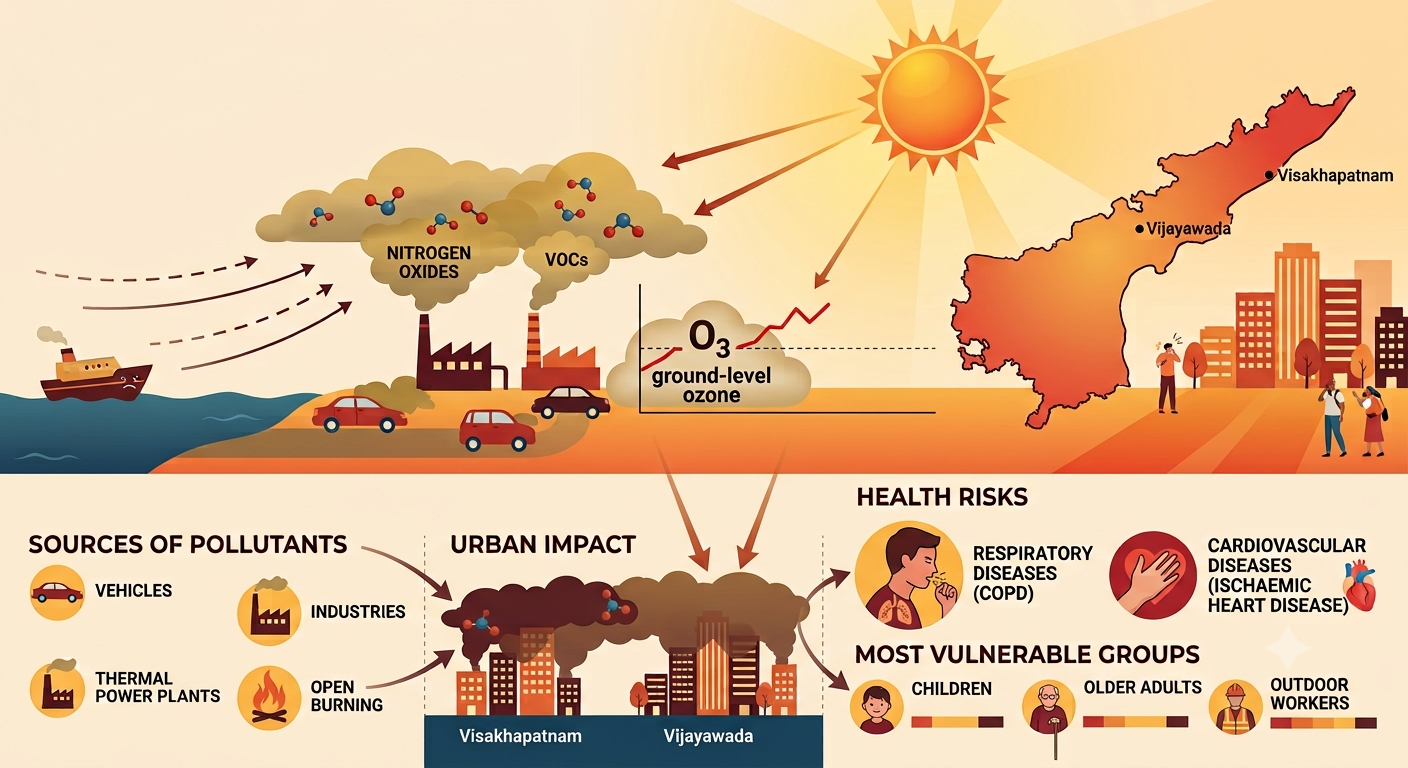
The study found that the East Coast climatic region, which includes coastal Andhra Pradesh, records a significant increase in surface ozone during heatwaves. The researchers said prolonged hot spells weaken sea-breeze circulation, reducing the inflow of cleaner marine air and allowing pollutants to accumulate near the ground. Intense sunlight further speeds up the chemical reactions that produce ground-level ozone.
According to the study, ozone concentrations during heatwaves exceeded the World Health Organization’s recommended limit of 70 micrograms per cubic metre by 14 to 25 per cent. During years of severe heatwaves, ozone levels increased by 5.5 to 7 micrograms per cubic metre as stagnant atmospheric conditions and weaker sea breezes limited the dispersal of pollutants.
The researchers said rising temperatures, combined with emissions from vehicles, industries, thermal power plants, and open burning, are creating a dual challenge of climate change and air pollution. They warned that the combination could increase the burden of respiratory and cardiovascular diseases.
The findings are particularly relevant for Andhra Pradesh, where coastal districts that usually benefit from cooling sea breezes may experience weaker air circulation during prolonged heatwaves. This allows pollutants to build up, while high temperatures and strong sunlight accelerate the conversion of nitrogen oxides and volatile organic compounds into ground-level ozone. As a result, cities such as Visakhapatnam and Vijayawada, along with other urban centres, could witness short-term spikes in ozone pollution during extreme weather events.
Published in the journal npj Clean Air, the study was conducted by Parambat Sangeetha and Jayanarayanan Kuttippurath of CORAL, IIT Kharagpur. The researchers found that ozone levels often remain elevated even after heatwaves subside, increasing the risk of chronic obstructive pulmonary disease and ischaemic heart disease.
The study identified children, older adults, outdoor workers, and people with pre-existing respiratory illnesses as the groups most vulnerable to the health effects of ozone pollution. It called for integrated policies to address climate change and air pollution together, warning that compound heatwave-and-air-pollution events are likely to become more frequent.