


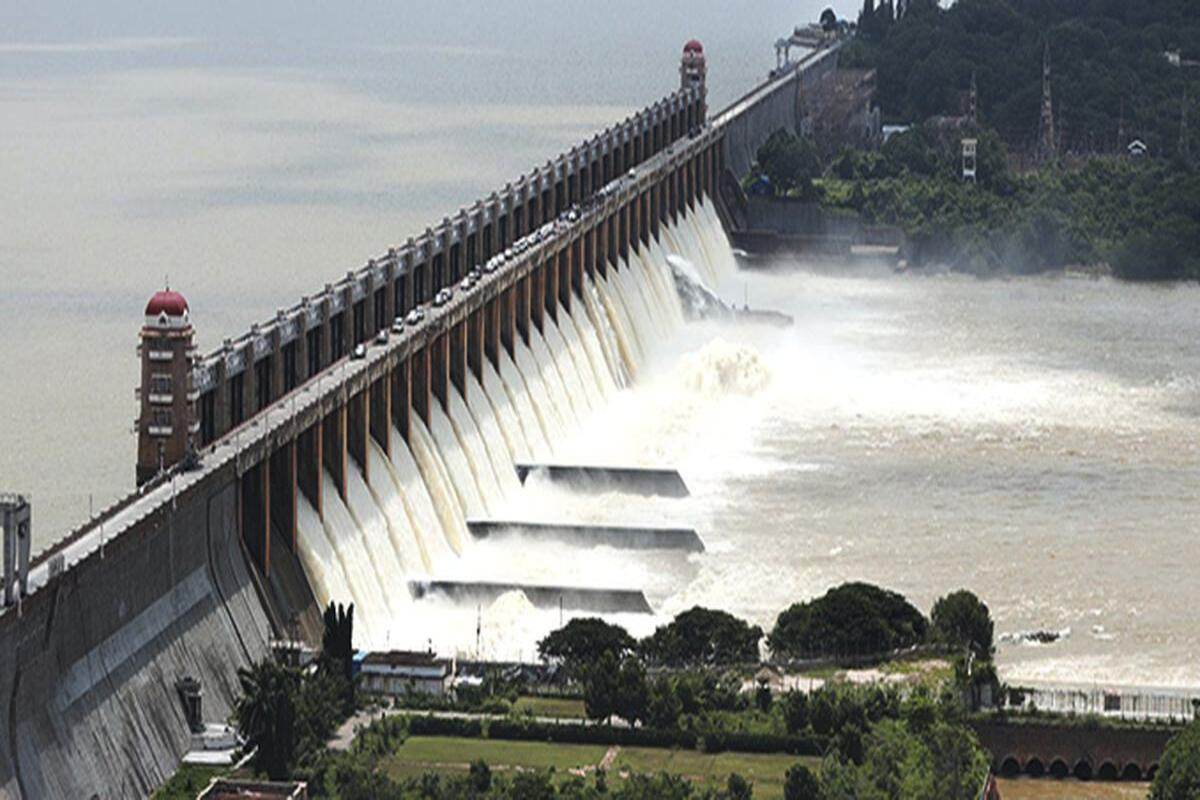
Vizag Development Council pitches integrated water-security plan for 2047
The Vizag Development Council (VDC) has proposed a long-term ‘Visakhapatnam Water Security Mission 2047’, envisaging an integrated network of reservoirs, Godavari water, recycled wastewater, desalination and rainwater to meet the city’s projected drinking and industrial water requirements.
The proposal, put forward by VDC president Dr. O. Naresh Kumar, draws on Singapore’s approach to water security, which combines multiple sources of supply with extensive water storage, recycling and desalination.
The council has suggested a four-source model for Visakhapatnam, with the Polavaram Left Main Canal proposed as the principal source of additional water. The canal, designed to carry about 23.44 TMC of Godavari water, could form the backbone of the city’s long-term water-supply system, according to the proposal.
The first component of the proposed system would involve better utilisation and integration of the city’s existing surface-water resources. These include Yeleru, Raiwada, Thatipudi, Meghadrigedda, Mudasarlova and Gambheeram Gedda reservoirs.
Yeleru, one of the major sources identified in the proposal, has a gross storage capacity of about 24.1 TMC and live storage of 17.95 TMC. The council has proposed that existing reservoirs be linked more effectively with future water infrastructure as part of a city-wide water-security network.
The proposal also places considerable emphasis on treated wastewater as a supplementary source. Recycled water could be used for data centres, industries, power plants, construction and landscaping, thereby allowing freshwater resources to be prioritised for drinking and other essential domestic requirements.
A phased desalination programme has also been proposed, particularly to cater to industrial and strategic requirements. The council has suggested that desalination be developed progressively as an additional source rather than as a substitute for surface-water supplies.
The proposal takes Singapore as a reference point for demonstrating the potential of an integrated approach. Singapore had three reservoirs in 1965 and now has 17, while more than two-thirds of its land area serves as water catchment. Its water-supply system combines local catchment water, imported water, recycled NEWater and desalinated seawater.
Singapore currently has five desalination plants. Its water demand is around 440 million gallons a day and is projected to nearly double by 2065, according to the proposal.
For Visakhapatnam, the VDC has also proposed examining the feasibility of five balancing reservoirs of around 5 TMC each, potentially providing an additional 25 TMC of storage. The additional capacity could be created through a combination of new reservoirs, off-stream storage, rehabilitation of existing tanks and other suitable storage systems.
The proposal further envisages a Vizag Water Grid linking the Polavaram supply, existing reservoirs, treatment plants, industrial areas and the city’s distribution network. Recycled wastewater and desalinated water could also be integrated into the grid.
The proposed approach seeks to move Visakhapatnam from dependence on individual water sources towards a diversified and interconnected water-supply system, with storage, recycling and desalination providing additional resilience as urban and industrial demand increases.
The council has proposed the plan as a long-term framework to address Visakhapatnam’s water requirements through 2047.