


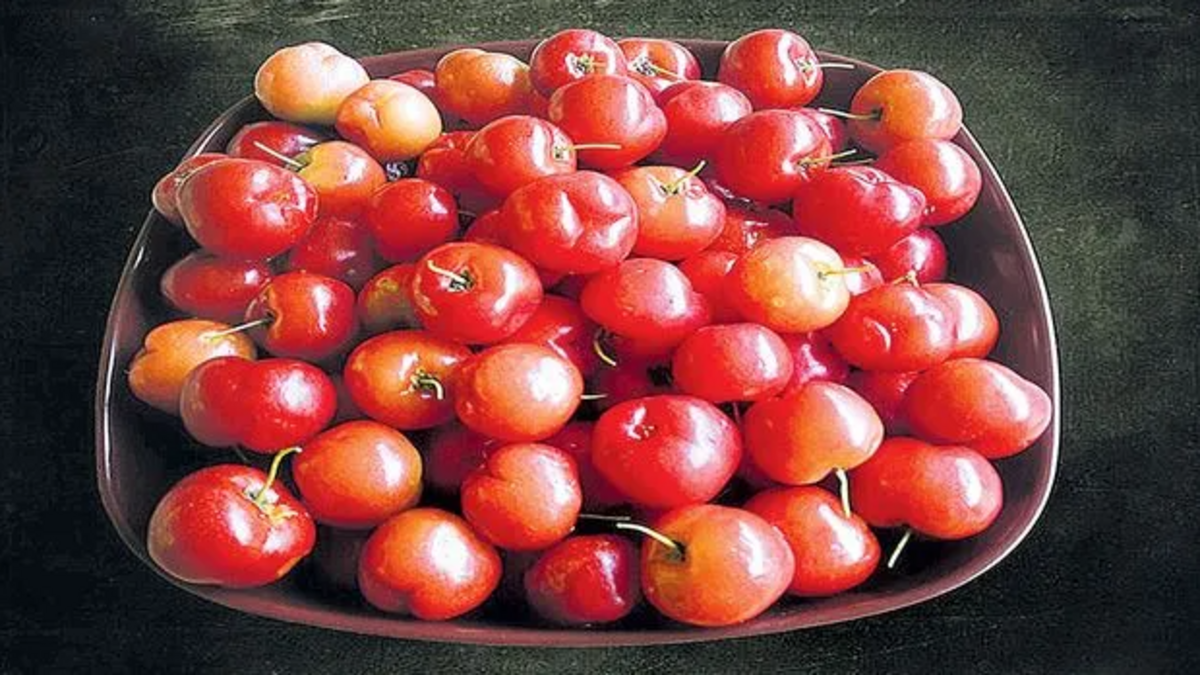
Barbados Cherry Fruiting at Chintapalli Station, Experts Highlight Cultivation Potential
Barbados cherry plants at the Horticultural Research Station in Chintapalli are in peak fruiting season, recording a good yield and attracting visitors to the facility.
The fruit, also known as West Indian cherry or acerola, is small and apple-like in appearance with a distinct sweet-and-tangy flavour. The crop has been under cultivation at the research station for the past decade.
Scientists say the species adapts well to tribal agro-climatic conditions and thrives in such regions. The plants begin bearing fruit from the fourth year after planting and continue yielding for up to 30 years under proper management.
Market demand for the fruit is rising steadily, with prices in Visakhapatnam reaching around ₹240 per kg. However, officials note that local marketing systems remain limited. They recommend that tribal households grow a few plants in their homestead gardens to meet personal consumption needs.
Dr. V. Ramana, senior scientist at the Chintapalli Horticultural Research Station, said the crop has strong potential for expansion in tribal areas. He added that large-scale cultivation could help develop better supply chains and enable access to urban retail markets, thereby improving farmer incomes.
Singampalli Meenakshi, home science scientist at BCT-KVK, Haripuram, highlighted the nutritional value of Barbados cherry, noting that it is rich in vitamin C, antioxidants, minerals and dietary fibre. She explained that the fruit supports immunity, helps regulate blood sugar levels, and promotes heart and joint health.