


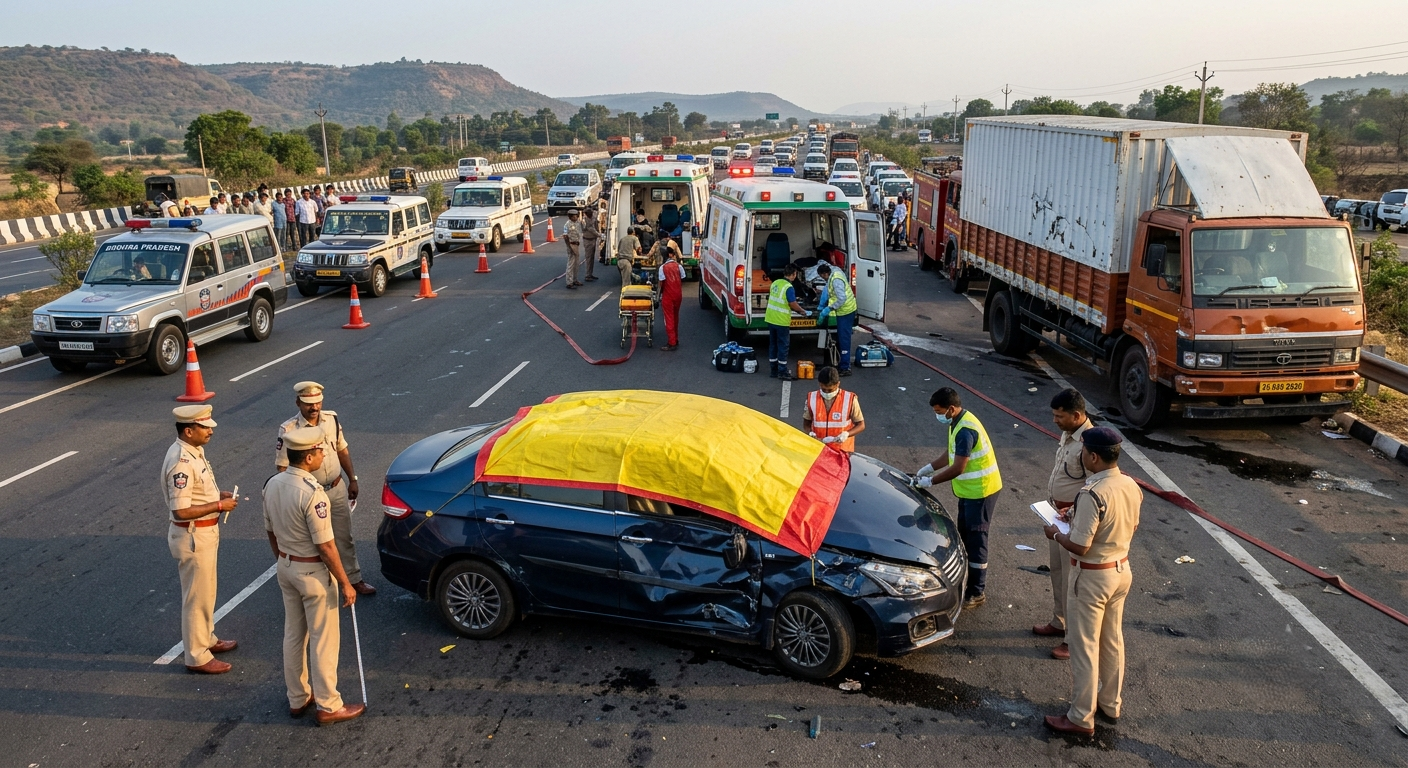
Rising Road Fatalities in Andhra Pradesh Despite Expanding Highway Network
Andhra Pradesh is witnessing a steady rise in road crash fatalities even as its highway and expressway network continues to expand, raising serious concerns about road safety and the effectiveness of emergency medical response systems in the state.
Data from the Ministry of Road Transport and Highways shows that the state’s accident severity index, measured as deaths per 100 accidents, increased from 38 in 2021 to 42.7 in 2024. This is significantly higher than the national average of 36.3, highlighting a widening gap in road safety outcomes despite rapid infrastructure development.
In 2024, Andhra Pradesh recorded 19,557 road accidents, which resulted in 8,346 fatalities. Officials note that while road connectivity has improved substantially in recent years, the high number of deaths indicates persistent challenges in enforcement, trauma care availability, and emergency response systems.
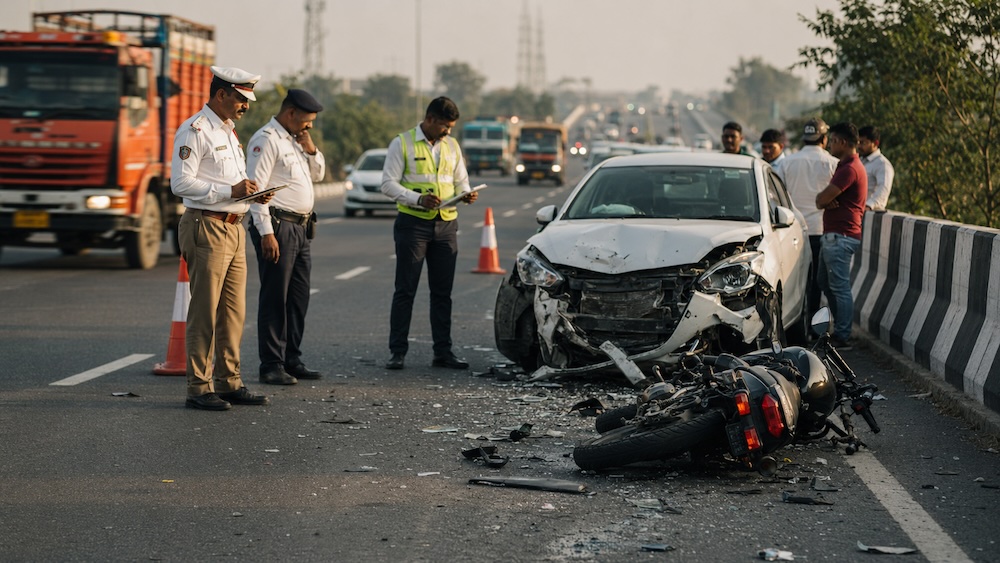
A comparative analysis presents a stark contrast with Kerala, which reported 48,834 road accidents during the same period but 3,880 deaths. The state’s accident severity index stood at 7.9, among the lowest in the country. Experts attribute this difference to stronger emergency response mechanisms, better-equipped trauma care facilities, and quicker medical intervention during the critical “golden hour” after accidents.
On average, Andhra Pradesh continues to report more than 8,000 deaths and over 20,000 injuries annually due to road crashes. Although the total number of accidents is not among the highest in the country, the consistently elevated severity index points to deeper structural issues in post-accident care and road safety management.
Road safety experts highlight that the uneven distribution of trauma care facilities remains a major concern, with only about 12 to 14 operational centres across the state. This limited coverage is particularly critical along major highway corridors, where timely medical intervention is essential to save lives.
Experts recommend expanding trauma care infrastructure, strengthening existing facilities, and improving coordination between state and central agencies. They also emphasize that reducing fatalities will require a dual approach involving faster emergency medical response systems and stricter road engineering and safety standards.