


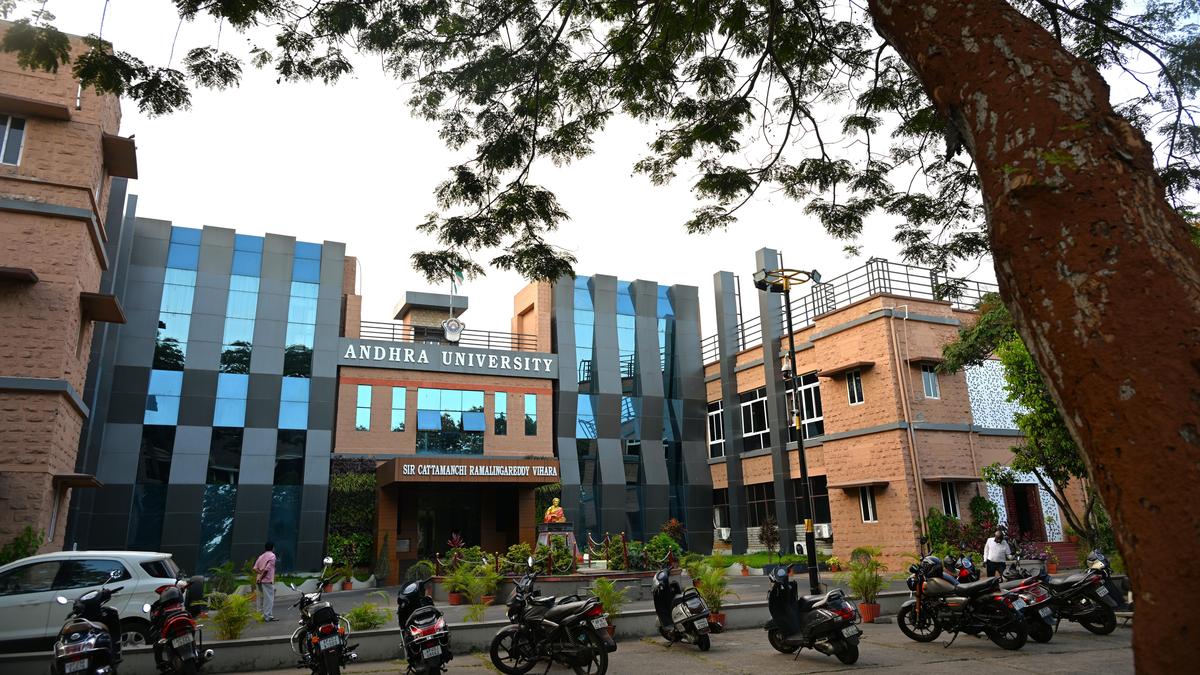
AU B.Ed & Law Colleges Face Scrutiny Over Out-of-State Management Quota
Admission practices at B.Ed. and law colleges affiliated to Andhra University (AU) are facing scrutiny, with a marked rise in out-of-State students securing seats under the management quota drawing criticism from local candidates and academic observers.
Students from Odisha and Chhattisgarh, among other States, are reportedly showing a growing preference for these programmes — a trend that was largely absent in previous academic years. College managements are said to be levying significantly higher fees for management quota seats, capitalising on the demand from out-of-State applicants and effectively pricing out local students.
“Regulating admissions of out-of-State students could help address the issue,” a senior AU official said.
AU currently has 61 B.Ed. colleges and six law colleges under its jurisdiction, with each institution offering approximately 20 to 40 seats under the management quota. According to sources, the fee structure for these seats is alleged to be considerably higher than prescribed norms, discouraging local aspirants, while out-of-State students are said to be willing to pay the amounts demanded to secure a seat.
Concerns go beyond fees. There are allegations of a differential fee system under which regular attendees are charged one rate and those appearing solely for examinations are charged another. Reports have also surfaced of additional payments being sought for purported “support” during examinations, a development that has deepened unease among students and parents.
Instances of examination malpractice, including large-scale copying, have been detected by special monitoring teams deployed by university authorities. Critics attribute the problem to assurances that certain institutions allegedly gave students at the time of admission.
There are now growing demands for AU to institute close monitoring of management quota admissions for the 2026–27 academic year, with stakeholders calling for transparent and equitable admissions to safeguard the interests of local students.