


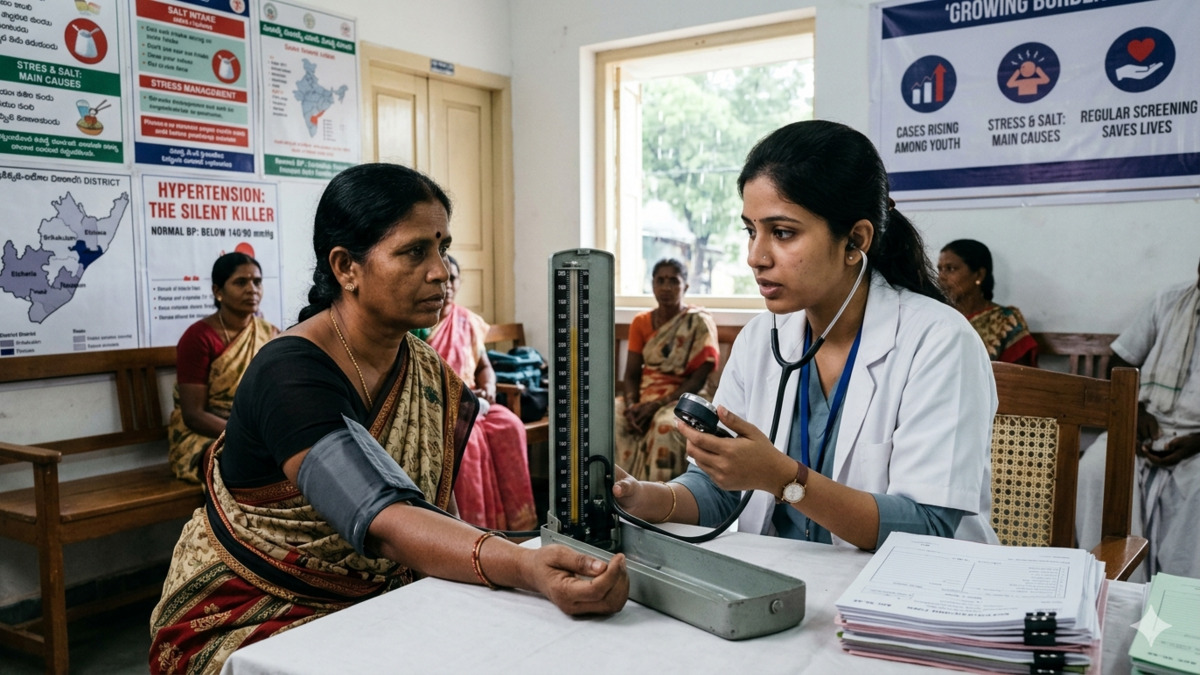
Hypertension Surge Alarms Doctors as Cases Rise Among Youth and Adults
Hypertension cases are on a steady rise, driven by changing lifestyles, increasing stress levels, unhealthy dietary habits, and reduced physical activity. Doctors note that the condition is now being increasingly detected among younger adults, in addition to the elderly population.
Health experts caution that uncontrolled high blood pressure continues to be a major risk factor for heart disease, stroke, and kidney-related complications. Often termed the “silent killer,” hypertension frequently remains undiagnosed until it leads to serious medical emergencies.
Medical professionals point out that the World Health Organization defines 140/90 mmHg as the standard threshold for normal blood pressure. They observe that the condition has become so widespread that nearly every household is now likely to have at least one affected member, highlighting the need for regular screening and early diagnosis.
In the district, an estimated 1.45 lakh people are living with hypertension, including 78,000 men and 67,000 women, with nearly 41,000 cases reported in the 30–45 age group. Doctors attribute the growing prevalence to high salt intake, often exceeding 10 grams per day, along with other dietary and lifestyle factors.
A large proportion of patients remain asymptomatic, leading to delays in diagnosis and treatment. Health officials note that hypertension is linked to nearly 55 per cent of heart attack cases. Rural areas such as Srikakulam, Etcherla, Palasa, and Tekkali are also reporting significant prevalence.
Government hospitals are currently treating around 82,000 patients, with an increasing number of cases among younger age groups attributed to stress, fast food consumption, sedentary lifestyles, and related lifestyle disorders.
Doctors recommend regular physical activity, reduced salt intake, a balanced diet, adequate sleep, and periodic health check-ups for early detection, effective management, and prevention of complications.