

Vizag’s Southern Coast Emerges as Most Polluted Stretch, Study Warns
The southern coastal stretch of Visakhapatnam has been identified as the most polluted part of the city’s coastline, according to a recent scientific study. The findings have triggered calls from environmentalists and civil society groups for immediate corrective measures.
Researchers from the Department of Environmental Sciences at Acharya Nagarjuna University and the National Remote Sensing Centre assessed coastal pollution using satellite remote sensing and GIS tools. The study covered the shoreline from Bheemunipatnam to Visakhapatnam and found that the southern stretch recorded significantly higher pollution levels.
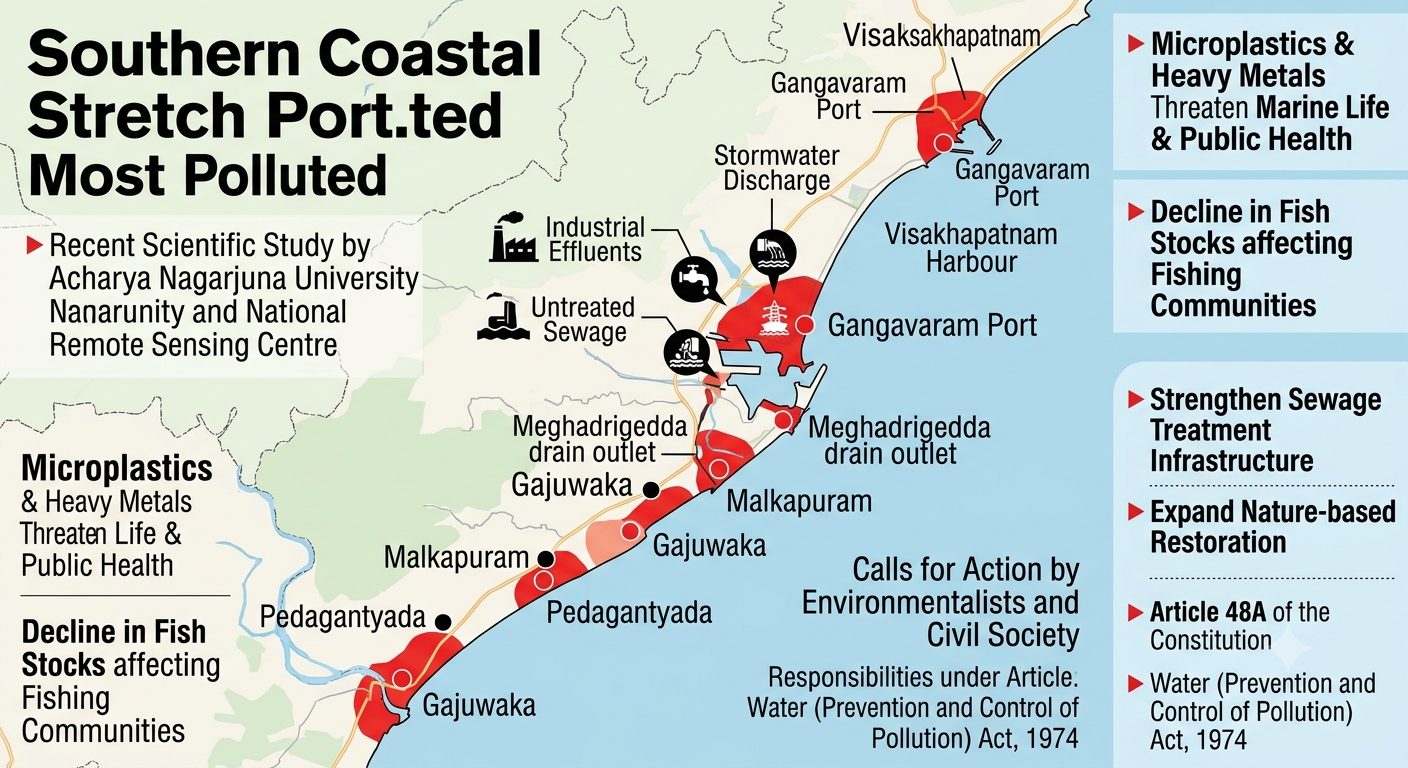
The worst-affected areas include the vicinity of Gangavaram Port, Visakhapatnam harbour, Meghadrigedda drain outlet, Malkapuram, Pedagantyada and Gajuwaka.
Environmentalist Bolisetty Satyanarayana said untreated sewage, stormwater discharge and industrial effluents were the primary drivers of coastal degradation. He cautioned that rising levels of microplastics and heavy metals are posing a growing threat to marine biodiversity as well as public health.
He urged authorities to strictly enforce judicial directives on coastal protection, strengthen sewage treatment infrastructure, and expand nature-based restoration methods such as bioremediation to revive the coastal ecosystem.
In a representation to Deputy Chief Minister Pawan Kalyan, former Union finance secretary EAS Sarma said the study points to inadequate regulation of industrial effluents entering coastal waters around Visakhapatnam.
Referring to Article 48A of the Constitution, Sarma said the state is duty-bound to protect and improve the environment. He also cited provisions of the Water (Prevention and Control of Pollution) Act, 1974, which assign responsibility to the Andhra Pradesh Pollution Control Board for preventing and controlling water pollution.
He further noted that long-term coastal contamination has led to a decline in fish stocks over the past two decades, affecting fishing communities and causing economic losses.