


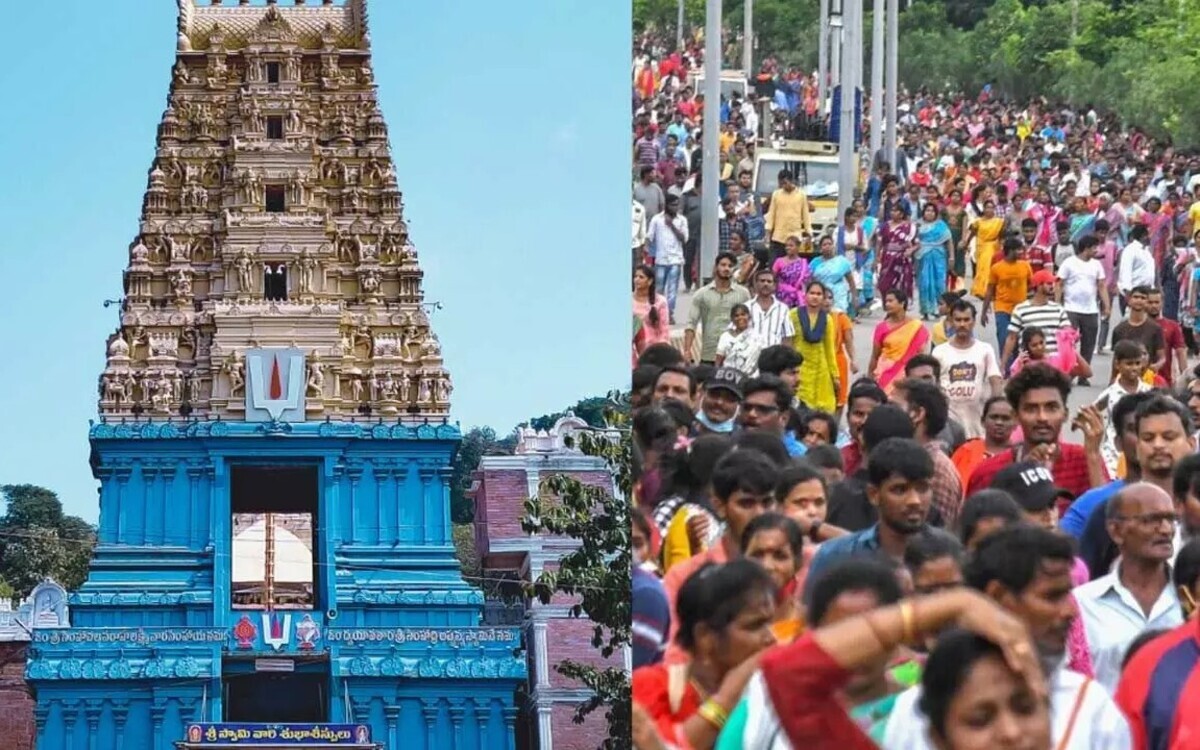
Simhachalam Giripradakshana: Where Faith Meets Tradition and Seamless Public Planning
As the full moon of Ashada Purnima, revered across India as Guru Purnima, rises over the sacred Simhachalam hill on Tuesday, Visakhapatnam will witness one of the country’s most remarkable expressions of collective faith, where devotion, spiritual discipline and the collective yearning for divine grace come together.
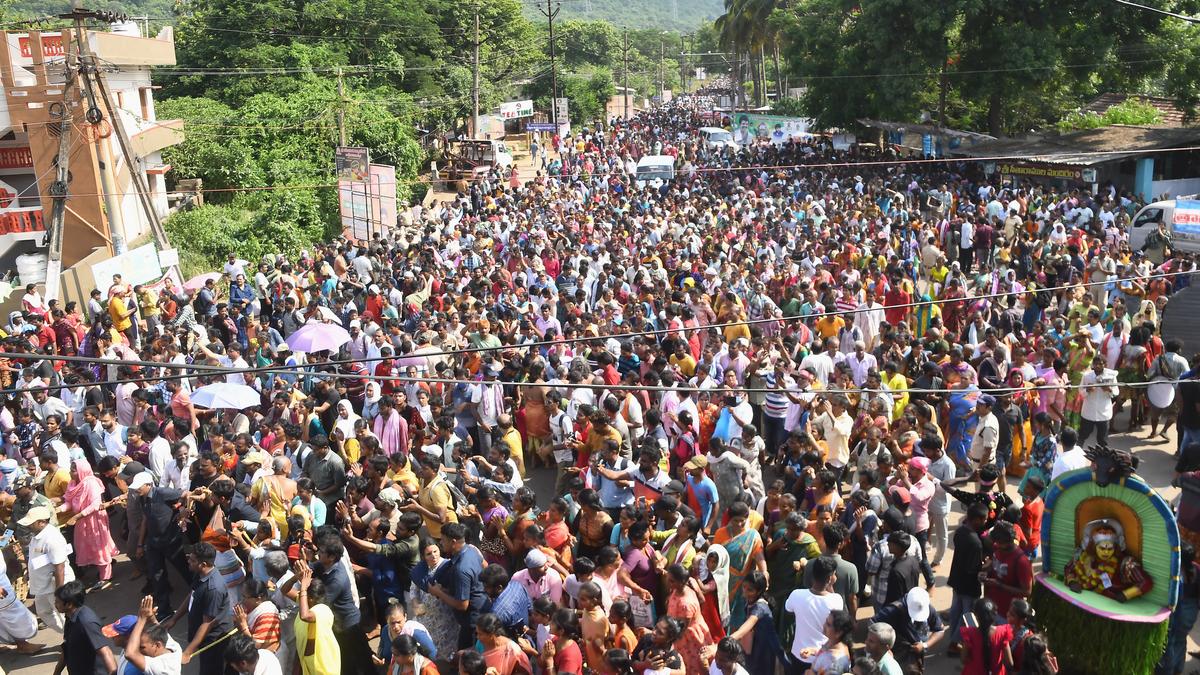
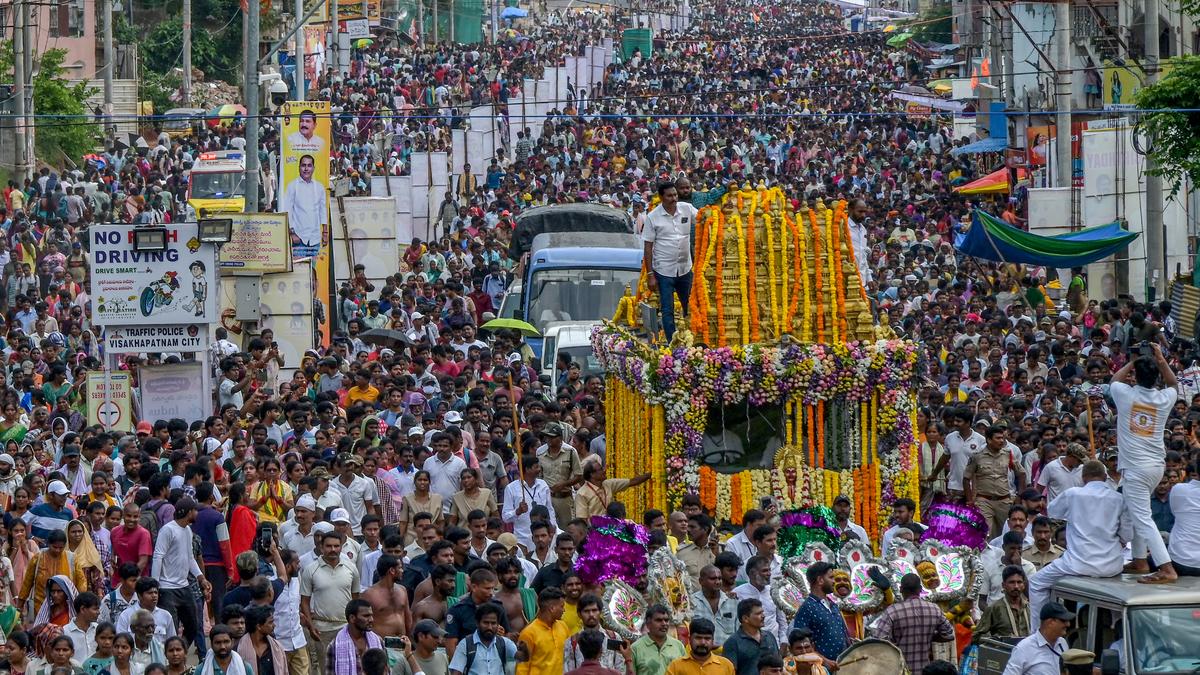
An estimated five to six lakh devotees are expected to participate in the 32-km Simhachalam Giripradakshana, transforming the city’s roads into a continuous stream of barefoot pilgrims seeking the blessings of Sri Varaha Lakshmi Narasimha Swamy.
More than a religious procession, the annual Giripradakshana has evolved into one of Andhra Pradesh’s largest spiritual gatherings, where centuries-old tradition converges with cutting-edge technology and one of the State’s largest coordinated public service operations. For devotees, however, it remains above all a sacred journey of faith, surrender and inner transformation.
The pilgrimage, observed every year on Ashada Purnima, draws devotees not only from Andhra Pradesh but also from Telangana, Odisha, Chhattisgarh and several neighbouring States. For nearly 24 hours, the roads surrounding Simhachalam hill echo with devotional chants, bhajans and prayers, presenting a rare spectacle of unwavering faith, community service and administrative coordination.
A Sacred Journey Rooted in Centuries of Faith
In Hindu philosophy, pradakshina, or circumambulation, signifies placing the divine at the centre of one’s life. It is regarded as an act of complete surrender, reminding devotees that every step is a movement closer to spiritual awakening and divine grace. At Simhachalam, devotees believe the entire hill is sacred and embodies the presence of Lord Narasimha himself. Circumambulating the hill is therefore regarded as equivalent to performing pradakshina around the presiding deity.
The Simhachalam temple, located about 16 km from Visakhapatnam at an elevation of around 244 metres, is one of the most revered shrines dedicated to Lord Narasimha in India. The temple is unique because it enshrines Lord Vishnu in his combined Varaha (Boar) and Narasimha (Man-Lion) incarnations.
Throughout the year, the deity remains covered with sandalwood paste, revealing the original idol only once a year during the celebrated Chandanotsavam, attracting devotees from across the country. For countless devotees, the temple is not merely a place of worship but a sacred space where faith finds expression and the soul seeks solace.
For generations, devotees have undertaken the Giripradakshana after making vows, believing that the sacred walk fulfils prayers, removes obstacles, purifies the mind, strengthens the spirit, brings inner peace and offers spiritual fulfilment. Many participate as an act of thanksgiving after recovering from illness, overcoming financial hardship or witnessing important milestones in their families.
The pilgrimage begins at Tholi Pavanchha, where devotees offer prayers before commencing the 32-km circuit around the hill. The route passes through several parts of Visakhapatnam before returning to the starting point.
Walking barefoot day and night, pilgrims observe fasting, chant the Lord’s name, sing devotional hymns or maintain complete silence as part of their spiritual discipline. Every step is regarded as an offering of devotion, transforming physical endurance into a deeply personal spiritual experience. Entire families undertake the journey together, while elderly devotees, young children and first-time participants are seen walking alongside seasoned pilgrims who have performed the ritual for decades.
Many carry children on their shoulders or walk while fulfilling personal vows, believing that every step taken around the sacred hill is an offering of devotion. For them, the physical strain of the pilgrimage is inseparable from its spiritual significance, symbolising perseverance, humility, surrender and the soul’s unwavering quest for divine blessings.
City Transforms into a Pilgrimage Corridor
As participation has steadily grown over the years, the Giripradakshana has become not only a major religious event but also one of the largest annual public management exercises undertaken in north coastal Andhra Pradesh.
The expected participation of nearly six lakh devotees has prompted the Visakhapatnam district administration to launch elaborate arrangements involving almost every government department.
District Collector M Abhishikta Kishore has directed officials to ensure seamless coordination among the police, revenue, Greater Visakhapatnam Municipal Corporation (GVMC), transport, electricity, health, fire services, roads and buildings, and other departments to facilitate a safe and incident-free pilgrimage.
A central Command and Control Centre has been established to monitor the event round the clock.
The 32-km pilgrimage route has been divided into seven operational zones and 28 sectors, each supervised by senior officers responsible for crowd management, sanitation, emergency response and public utilities. Officials from multiple departments will work in six shifts from July 27 to July 29 to ensure uninterrupted services throughout the pilgrimage.
AI Surveillance and RFID Technology Strengthen Safety Measures
This year’s Giripradakshana will also witness one of the most technology-driven crowd management systems deployed for a religious gathering in the region.
The district administration is introducing an AI-powered crowd monitoring system, integrated with nearly 70 temporary CCTV cameras strategically installed along the pilgrimage route.
Live video feeds will be continuously monitored at the central Command and Control Centre as well as seven field control rooms, enabling authorities to identify overcrowding, regulate pedestrian movement and respond quickly to emergencies.
In another significant initiative, RFID-enabled wristbands are being distributed to children and elderly devotees. The digital identification system is expected to help officials quickly reunite those who become separated from their families amid the massive crowds, substantially reducing the time required to trace missing persons.
Officials say the technology is intended to supplement conventional policing and improve emergency response rather than replace on-ground personnel.
Massive Public Infrastructure Along the 32-km Route
To ensure the comfort, convenience and safety of pilgrims, comprehensive public support infrastructure has been established along the entire pilgrimage route. Key arrangements include 28 drinking water distribution centres, 31 medical camps supported by ambulances and mobile medical units, 595 temporary toilets, shower facilities at Appughar, resting points at regular intervals, continuous sanitation and waste clearance, public address systems, emergency help desks, and extensive temporary lighting throughout the route.
Medical teams will remain on high alert throughout the pilgrimage to provide prompt assistance in cases of dehydration, fatigue, and other health emergencies that may arise during the long-distance walk, particularly during the monsoon season. These measures are intended to ensure that pilgrims receive timely support, enabling them to undertake the sacred journey in a safe, dignified and spiritually enriching environment.
Spirit of Volunteerism Remains the Pilgrimage’s Defining Feature
Beyond official arrangements, the Giripradakshana continues to be celebrated for Visakhapatnam’s long-standing culture of voluntary public service.
Hundreds of social organisations, charitable trusts, NGOs, religious institutions and residents establish service camps across the route, offering free meals, buttermilk, drinking water, fruits, medicines and first aid to pilgrims.
Volunteers remain on duty through the night, helping elderly participants, guiding visitors unfamiliar with the route and extending assistance whenever required.
For many residents, serving devotees has become an annual tradition passed down through generations, reinforcing the belief that seva, or selfless service, is itself a sacred form of worship and a path to spiritual fulfilment.
Extensive Traffic Diversions Planned
To facilitate the movement of lakhs of devotees, the Visakhapatnam City Police have announced comprehensive traffic regulations. Heavy vehicles entering the city from Srikakulam and Vizianagaram will be diverted at Anandapuram towards the Anandapuram-Sabbavaram-Anakapalle Highway.
Several stretches, including the Hanumanthuwaka-Maddilapalem Road, will remain vehicle-free during peak pilgrimage hours. Restrictions will also be imposed on parts of Beach Road between Kurupam Junction and Appughar.
Authorities have created a dedicated green corridor to ensure uninterrupted movement of ambulances, fire engines and other emergency services throughout the event. In addition, 58 designated parking locations, equipped with CCTV surveillance, lighting and directional signage, have been developed for devotees arriving in private vehicles.
Considering the expected traffic congestion and the movement of large crowds, the district administration has proposed declaring a holiday for educational institutions on the day of the pilgrimage.
A Tradition That Continues to Inspire
Religious scholars describe the Giripradakshana as a profound spiritual metaphor, where the circular journey symbolises completeness and life’s eternal cycle, reminding devotees that the soul’s journey towards the divine is guided by perseverance, humility and selfless action rather than ritual alone.
As lakhs of devotees prepare to undertake the sacred walk around Simhachalam hill, the annual pilgrimage once again stands as a testament to the enduring power of faith, devotion and the timeless spiritual bond between the devotee and the divine.
While rooted in centuries-old religious tradition, today’s Giripradakshana is equally a story of meticulous planning, technological innovation and extraordinary community participation. It is this seamless convergence of devotion, public service and civic cooperation that transforms the Simhachalam Giripradakshana into not only Andhra Pradesh’s largest annual spiritual gathering but also one of India’s finest examples of how faith can unite communities, inspire selfless service and elevate the human spirit.