


Revenue Clinics Show Strong Response, But Pendency Persists
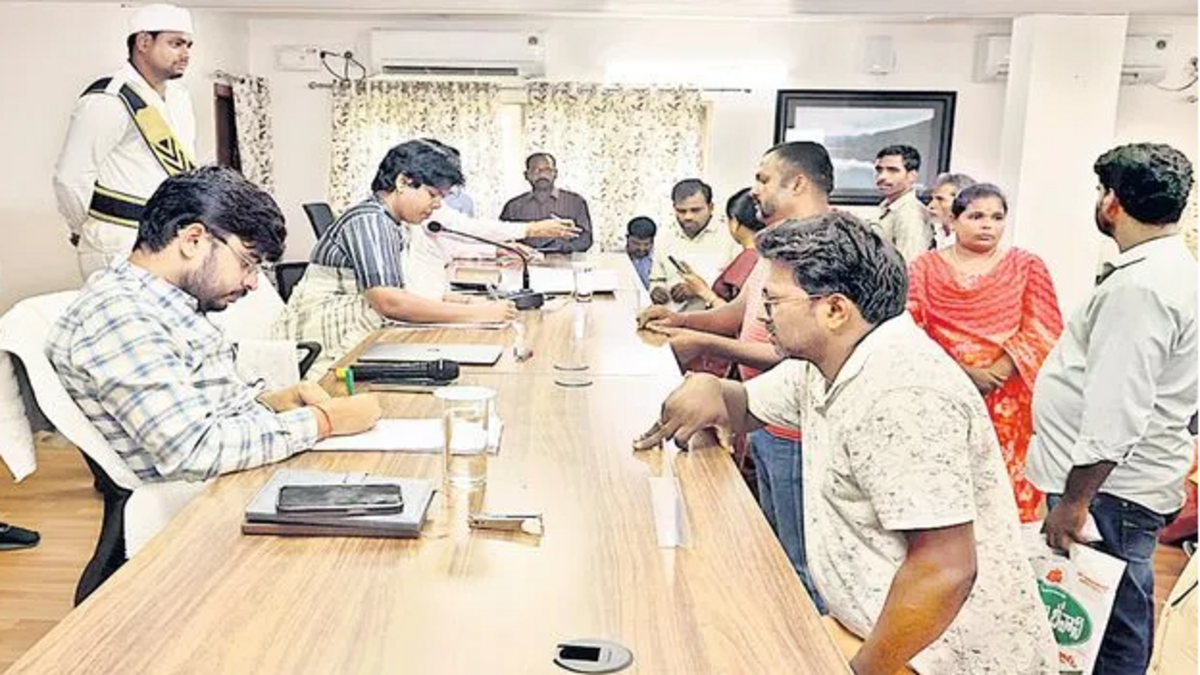
Revenue Clinics introduced by the state government for faster and more transparent resolution of land-related grievances have evoked a strong response in the district. However, a significant number of cases continue to remain pending, raising concerns over the pace of disposal.
Since its launch on December 29 last year, the initiative has conducted 14 clinics, while two were cancelled. As many as 1,885 petitions have been received so far. Of these, 827 cases have been disposed of, 442 rejected, and 616 are still pending.
Officials said most petitions relate to complex land issues, including resurvey errors, boundary disputes, land classification corrections, and encroachments. The technical nature of these cases, coupled with the need for field-level verification, has slowed down disposal.
Though efforts are underway to integrate grievance tracking with online revenue records up to the village level, delays continue to persist. Officials attribute the pendency to a shortage of staff and delays in field inspections and follow-up action.
Questions have also been raised over transparency in some cases. Recently, two Village Revenue Officers were caught by the Anti-Corruption Bureau for allegedly demanding bribes in mutation-related matters, exposing lapses in field-level accountability.
To clear the backlog, the government has rolled out a new initiative titled ‘One Month–One Village’, which will be implemented from May. Under this, one village per mandal will be taken up every month for focused attention by revenue officials.
The exercise will be taken up in phases, starting with grievance collection in the first week, followed by field inspection in the second, issue of orders in the third, and a gram sabha in the final week to address pending and complex cases.
Officials hope the initiative will help reduce pendency and improve efficiency in land grievance redressal across the district.