

Vizag Emerging as an Urban Heat Island, Study Warns
Visakhapatnam, once known for its mild coastal climate, is steadily turning into a heat trap due to rapid urbanisation, industrial expansion, and shrinking green cover, according to a study conducted by researchers from Andhra University and IIIT Kottayam.
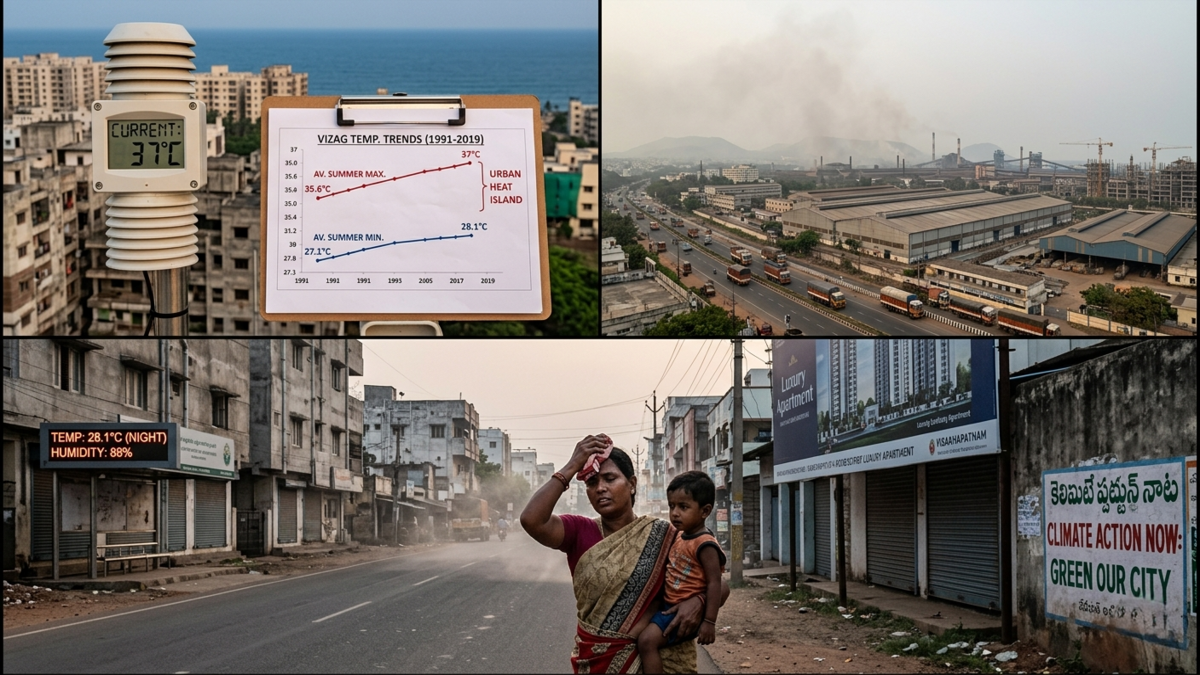
The researchers analysed climate data from 1991 to 2019 and found a significant rise in both daytime and nighttime temperatures across the city, with several areas now exhibiting characteristics of an “urban heat island”.
The study found that average summer maximum temperatures increased from 35.6°C to 37°C during the period, while minimum temperatures rose from 27.1°C to 28.1°C. Researchers said the trend reflects a broader transformation in the city’s local climate rather than temporary seasonal variation.
Industrial and densely urbanised regions such as Gajuwaka, the Steel Plant area, and the Airport zone recorded the sharpest rise in temperatures. Expanding concrete infrastructure, wider road networks, increasing vehicle emissions, and large-scale land-use changes were identified as the major contributing factors.
Researchers noted that rapid urban expansion has reduced the city’s natural ability to cool after sunset, resulting in warmer nights and increased heat stress for residents. In contrast, nearby rural areas such as Padmanabham continue to remain relatively cooler, highlighting the growing climatic divide between urban and rural regions.
The study also warned of increasingly erratic rainfall patterns, projecting intense rainfall events of up to 158 mm within a single month in the coming years. Such events could overwhelm drainage systems and increase the risk of flooding in low-lying areas.
Scientists cautioned that rising humidity levels, combined with higher temperatures, could pose serious health risks, particularly for children and the elderly.
Professor Gurram Muralikrishna, who led the research along with Professor Shivaparvathi and researchers Anju Yajjala and Rajeswari Erasala, called for urgent measures, including the expansion of green cover, climate-sensitive urban planning, improved rainwater management, and heat mitigation strategies.