


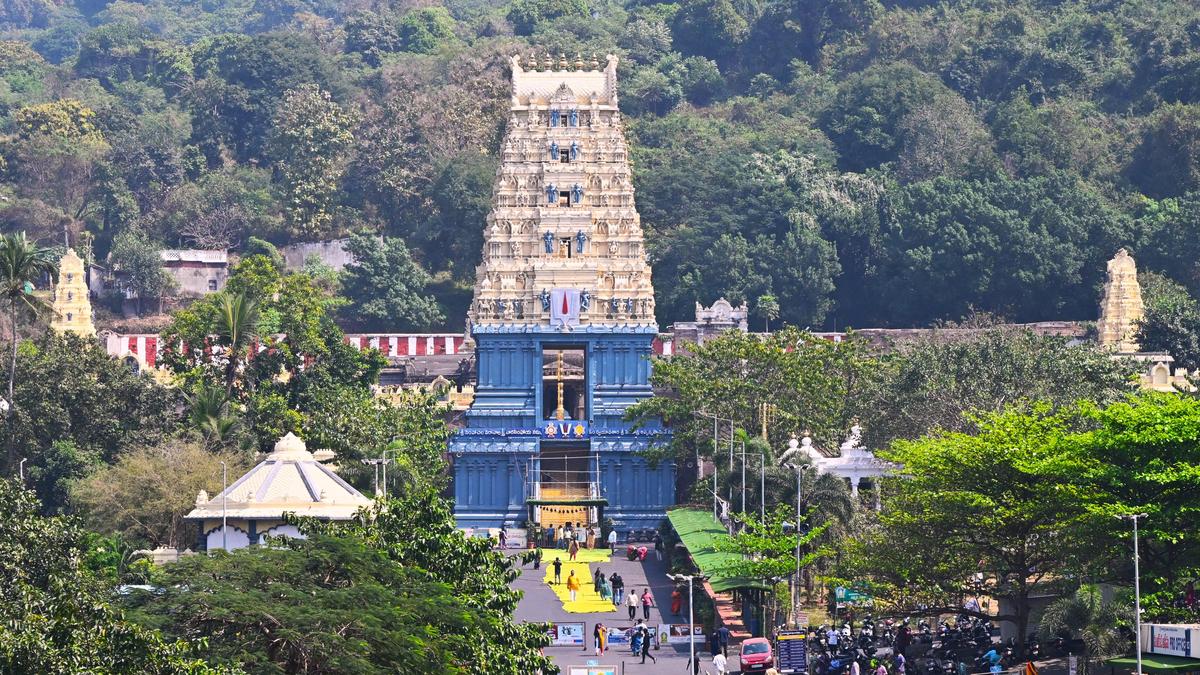
Simhachalam temple to raise sandalwood plantation for ritual needs
The Sri Varaha Lakshmi Narasimha Swamy Devasthanam at Simhachalam is planning to establish a large-scale sandalwood plantation on the temple hills to secure a sustainable supply of sandalwood for its distinctive religious rituals and reduce its dependence on external sources.
The initiative, aimed at achieving long-term self-sufficiency, will begin with the planting of around 500 sandalwood saplings. The plantation will be developed with the active participation of devotees through a sponsorship programme.
The proposal gained momentum after the temple’s hereditary trustee and chairman, P. Ashok Gajapati Raju, who also serves as the Governor of Goa, directed the temple administration to formulate a scheme enabling devotees to contribute to the project. Under the proposed programme, pilgrims and well-wishers will be able to purchase premium-quality sandalwood saplings and donate them to the Devasthanam for planting across the temple hills.
Temple Executive Officer J. Venkata Rao said the proposal was under active consideration and that modalities for implementing the programme were being finalised.
“We are working out the operational details. A dedicated scheme will soon be introduced to facilitate devotees’ participation. In the first phase, around 500 sandalwood saplings will be planted on suitable vacant land across the temple hills,” he told The Coastal Times.
The plantation is expected to address the temple’s long-standing dependence on procuring sandalwood from outside, an essential requirement for its centuries-old ritual traditions.
Unlike most Vaishnavite temples, the presiding deity of Lord Varaha Lakshmi Narasimha at Simhachalam remains covered throughout the year with a thick layer of sandalwood paste, known as Chandanam. According to temple tradition, the paste is applied to cool and pacify the deity’s fierce manifestation. The coating is renewed four times a year, with nearly 125 kg of sandalwood used for each application.
The deity’s original form, known as Nijarupa, is revealed to devotees only once a year during the Chandanotsavam festival, held on Akshaya Tritiya. The darshan lasts for about 12 hours, after which a fresh layer of sandalwood paste is applied.
The Devasthanam consumes nearly 500 kg of premium-quality sandalwood annually to perform these rituals. With genuine sandalwood heartwood costing between ₹15,000 and ₹20,000 per kg, the temple spends an estimated ₹75 lakh to ₹1 crore every year on procuring sandalwood.
Temple authorities believe the proposed plantation will help ensure a steady supply of sandalwood in the coming years while significantly reducing procurement costs and preserving an integral part of the shrine’s unique religious traditions.